In the heat of summer, your air conditioning unit isn’t just a luxury; it’s a lifeline. It works tirelessly to keep your home comfortable, but this vital appliance is incredibly vulnerable to the silent, sudden attacks of power surges. These electrical spikes, often unseen, can wreak havoc on your AC’s delicate components, leading to costly repairs or even complete system failure. That’s where a dedicated surge protector for AC unit steps in, acting as your home’s unsung hero, safeguarding your comfort and your investment.
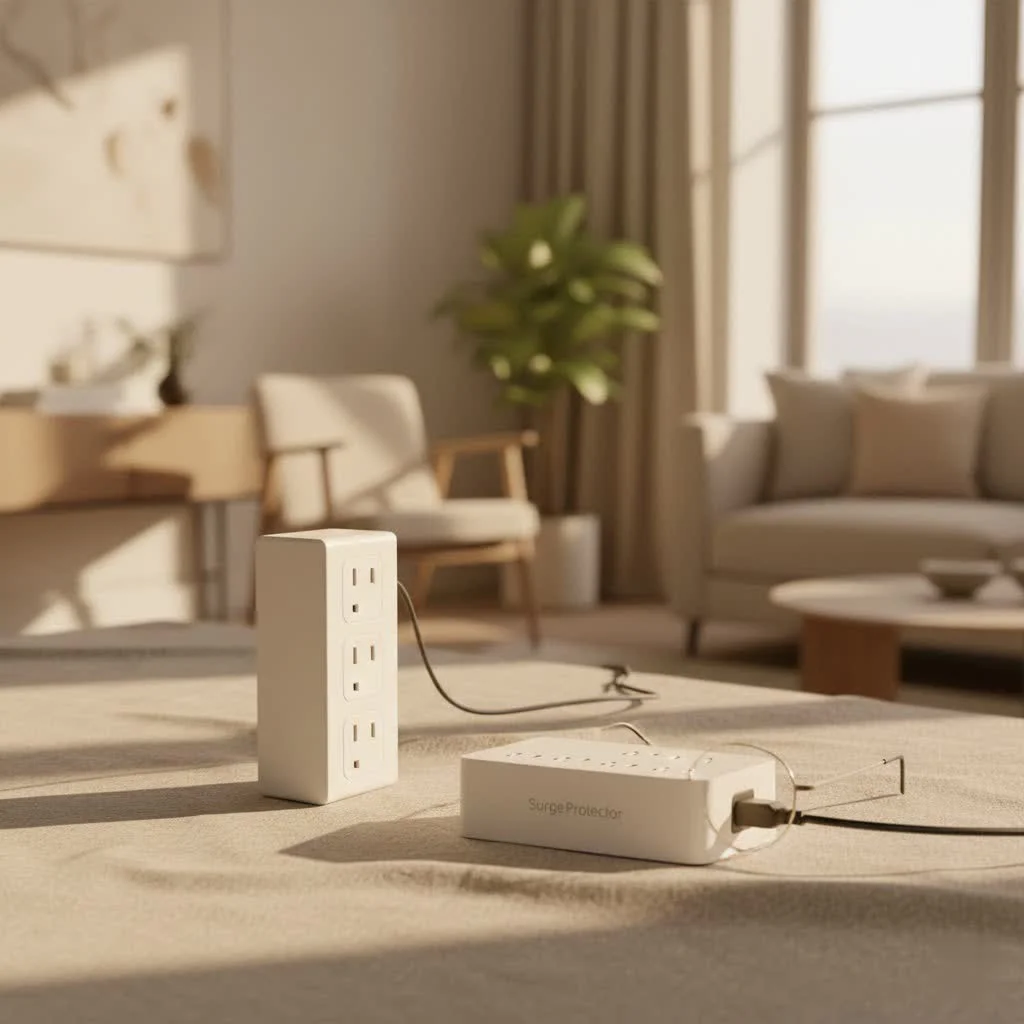
Imagine a sudden jolt, a lightning strike miles away, or even a simple fluctuation in your home’s electrical grid. Any of these events can send a rush of excess voltage through your electrical system. Your AC, with its intricate electronics and powerful motors, is a prime target. Without proper protection, this surge can fry circuits, damage the compressor, and leave you sweltering. Investing in a high-quality surge protector for AC unit isn’t just a recommendation; it’s a necessity in today’s electrically complex world. For expert surge protectors reviews on this site.
What is a Surge Protector and How Does it Shield Your AC?
At its core, a surge protector is an electrical device designed to shield electronic equipment from voltage spikes. Think of a power surge as an unexpected tidal wave of electricity. While your home’s wiring is designed for a steady flow, a surge is a sudden, dramatic increase in voltage that far exceeds the normal operating level. These surges can originate from external sources like lightning strikes, power grid switching, or downed power lines, or even internally from large appliances turning on and off.
A surge protector for AC unit works by diverting this excess voltage away from your appliance and safely into the ground. Most surge protectors utilize components called Metal Oxide Varistors (MOVs). When the voltage is at a safe level, the MOV acts as an insulator. However, when a surge hits and the voltage rapidly increases, the MOV’s electrical resistance drastically drops, effectively opening a path for the dangerous excess current to bypass your AC unit and flow to the ground wire. Newer technologies, like Gas Discharge Tube (GDT) technology, can also be employed for even more robust protection, dissipating larger surges across multiple pathways.
It’s crucial to understand that a surge protector for AC unit is vastly different from a standard power strip. A power strip merely offers additional outlets; it provides no defense against voltage spikes. Plugging your AC into a simple power strip is akin to plugging it directly into the wall – completely unprotected from the destructive force of a surge. A true surge protector will have specific ratings for joules and voltage protection, clearly indicating its protective capabilities.
Why Your AC Unit Desperately Needs a Surge Protector
Your air conditioning system is one of the most significant investments in your home, essential for comfort and indoor air quality. Leaving it unprotected against power surges is a gamble you don’t want to take.
Protecting Your Significant Investment
|
Our Picks for the Best Surge Protector in 2026
As an Amazon Associate I earn from qualifying purchases.
|
||
| Num | Product | Action |
|---|---|---|
| 1 | Amazon Basics Surge Protector Power Strip, 6-Outlet, 790 Joules, Circuit Breaker, LED Indicator Light, 6ft Extension Cord, Black |

|
| 2 | Philips 6-Outlet Extender Surge Protector, 2 Pack, Wall Tap, 900 Joules, 3-Prong, Space Saving Design, Protection Indicator LED Light, ETL Listed, White, SPP3466WA/37 |
|
| 3 | Belkin 12-Outlet Surge Protector Power Strip w/ 12 AC Outlets & 8ft Flat Plug, UL-listed Heavy-Duty Extension Cord for Home, Office, Travel, Computer, Laptop, Charger - 3,940 Joules of Protection |
|
| 4 | 3 Prong GFCI Power Strip with 8 Outlets, 4 USB Ports(2 USB A & 2 USB C), 1050J Surge Protector, 6.56 FT Extension Cord with GFCI Plug (ETL Listed) for Home/Office/Kitchen/Dormitory |
|
| 5 | Amazon Basics Surge Protector Power Strip, 6-Outlet with 200J Protection, 2ft Extension Cord, Rectangle, Black (2 Pack) |
|
| 6 | SUPERDANNY Surge Protector Power Bar with 6 USB Charging Ports, Mountable Flat Plug Power Strip, 22 Widely-Spaced Outlets, 2100 Joules, 8Ft Heavy Duty Extension Cord for Home, Office, Dorm, Black |
|
| 7 | Surge Protector Outlet Extender - with Rotating Plug, 6 AC Multi Plug Outlet with 4 USB Ports (2 USB C), 1800J Wall Charger, 3-Sided Power Strip with Spaced Outlet Splitter for Home, Office, Travel |
|
| 8 | Amazon Basics Surge Protector Power Strip, 6-Outlet, 790 Joules, Circuit Breaker, LED Indicator, 6ft Extension Cord, White |
|
| 9 | Surge Protector Power Strip - Nuetsa Flat Plug Extension Cord with 8 Outlets and 4 USB Ports, 6 Feet Power Cord (1625W/13A), 2700 Joules, ETL Listed, Black |
|
| 10 | Surge Protector Power Strip - HANYCONY 8 Outlets 4 USB (2 USB C) Charging Ports, Multi Plug Outlet Extender, 5Ft Braided Extension Cord, Flat Plug Wall Mount Desk Charging Station for Home Office ETL |
|
AC units, especially modern high-efficiency models, represent a substantial financial commitment. The cost of repairing or replacing major components like a compressor can easily run into thousands of dollars. A power surge can instantly render these expensive parts useless. A surge protector for AC unit acts as an insurance policy, sacrificing itself to save your more valuable appliance. Homeowner’s insurance policies often don’t cover damage caused by power surges, leaving you with the entire bill.
Safeguarding Sensitive Electronics
Modern air conditioners are far more than just mechanical fans and coils. They are equipped with sophisticated electronic control boards, smart thermostats, and variable-speed motors that rely on precise voltage. These sensitive electronic systems are incredibly vulnerable to even minor voltage fluctuations, let alone a major surge. A surge can corrupt programming, damage microprocessors, and lead to erratic operation or complete failure.
Extending Lifespan and Maintaining Efficiency
Even small, repetitive power fluctuations that aren’t severe enough to cause immediate catastrophic failure can still degrade your AC unit over time. These subtle stresses can slowly erode the integrity of electrical components, leading to reduced efficiency and a shortened lifespan. A surge protector for AC unit helps maintain a stable electrical supply, allowing your system to operate at optimal levels, thus extending its operational life and preserving its energy efficiency.
Peace of Mind
Beyond the tangible financial and operational benefits, there’s an invaluable sense of peace that comes with knowing your essential cooling system is protected. You won’t have to worry about the next thunderstorm or power grid anomaly potentially leaving you without air conditioning when you need it most. This peace of mind is a significant, often overlooked, benefit.
Common AC Components Vulnerable to Power Surges
Understanding which parts of your AC are most at risk highlights why a surge protector for AC unit is so critical:
- Compressor: This is the heart of your AC system, responsible for circulating refrigerant. It’s incredibly expensive to replace, and a major power surge can easily overload and destroy it.
- Control Board: The “brain” of your AC, regulating all operations from temperature control to fan speeds. Its delicate circuitry is highly susceptible to surge damage, leading to malfunctions or total system shutdown.
- Thermostat: Especially smart or programmable thermostats, which contain sensitive electronics, can be fried by a surge, disrupting your ability to control your home’s climate.
- Blower Motor: Responsible for circulating conditioned air throughout your home, the blower motor can become inefficient or fail entirely if subjected to a power surge.
- Wiring: While often overlooked, surge damage to internal wiring can lead to short circuits, system inefficiencies, and even fire hazards within the unit.
Choosing the Right Surge Protector for Your AC Unit: A Buyer’s Guide
Selecting the appropriate surge protector for AC unit requires more than just picking the first one you see. Here’s what to look for to ensure robust protection:
- Joule Rating: This indicates how much energy the surge protector can absorb before it fails. For an AC unit, aim for a surge protector for AC unit with a joule rating of at least 1000 Joules, and preferably higher (2000-3000+ Joules for enhanced protection). A higher rating generally means better and longer-lasting protection.
- Clamping Voltage (UL VPR): This specifies the maximum voltage the surge protector allows through before it begins to divert excess current. The lower the clamping voltage, the better the protection. Look for a UL Voltage Protection Rating (VPR) of 330 volts or less.
- UL Certification (UL 1449): Always ensure the surge protector for AC unit is UL 1449 certified. This is the safety standard for surge protective devices. For HVAC systems, look for Type 1 or Type 2 ratings, indicating they are suitable for installation at the service entrance or at the sub-panel.
- Response Time: A good surge protector should react in nanoseconds. Faster response times mean quicker diversion of harmful voltage.
- Weatherproof Enclosure: If your AC unit is an outdoor condensing unit, the surge protector must have a NEMA Type 3R or 4X rated weatherproof and UV-resistant enclosure to withstand environmental elements.
- Indicator Lights: Most quality surge protectors include LED indicator lights. A “protection active” light confirms the unit is functioning, while a “grounded” light ensures it’s properly connected to earth. If the “protection active” light goes out, it’s time for a replacement.
- Thermal Fuses: These are essential safety features that prevent the surge protector from overheating during a catastrophic surge, minimizing the risk of fire.
- Compatibility: Ensure the surge protector is rated for your AC unit’s voltage, typically 120/240 VAC for residential systems.
- Types of SPDs: While some homeowners opt for whole-home surge protectors installed at the main electrical panel, a dedicated surge protector for AC unit often offers more granular and robust protection for that specific appliance, sometimes combining both types offers the best defense.
Installation: Leave it to the Pros
Installing a surge protector for AC unit involves working with your home’s main electrical system. This is not a DIY project for the faint of heart. Incorrect installation can not only compromise the effectiveness of the protector but also create significant safety hazards, including electrical shock or fire. It is always strongly recommended to have a qualified HVAC technician or a licensed electrician install your surge protector. They ensure correct wiring, grounding, and compliance with all local electrical codes.
When to Replace Your AC Surge Protector
Unlike some electronics, surge protectors have a finite lifespan. Each time they absorb a surge, their capacity to protect diminishes. The joule rating essentially represents the total energy it can handle over its lifetime. Most quality surge protector for AC unit devices come with indicator lights that signal when the protective components have been compromised and the unit needs replacement. Typically, if the “protection active” light is off, it’s time for a new one. Some experts even suggest replacing them every 3-5 years, especially in areas prone to frequent electrical storms, regardless of indicator lights.
“Proactive protection is the cornerstone of electrical longevity,” advises our Senior Protection Engineer, Dr. Evelyn Thorne. “For an investment as significant as your AC unit, a high-quality surge protector isn’t just an accessory; it’s a fundamental part of its operational resilience and your overall home safety strategy.”
Frequently Asked Questions (FAQs)
Are all surge protectors the same?
Absolutely not. As discussed, there’s a significant difference between a basic power strip and a dedicated surge protector for AC unit. Even among surge protectors, specifications like joule rating, clamping voltage, and UL certification vary widely, directly impacting their effectiveness and the level of protection they offer.
Can a power strip protect my AC?
No. A power strip provides no surge protection whatsoever. It only offers more outlets. Plugging your AC into a power strip leaves it completely exposed to power surges.
How often should I replace my AC surge protector?
Most surge protectors have indicator lights that will turn off when their protective components are no longer functional. However, even without the light going out, it’s a good practice to consider replacement every 3-5 years, especially in areas with frequent electrical disturbances, as their capacity degrades over time.
Will homeowner’s insurance cover surge damage?
In most cases, standard homeowner’s insurance policies do not cover damage caused by power surges unless it’s explicitly stated or caused by a covered peril like a lightning strike. Always check your specific policy, but investing in a surge protector for AC unit is a safer bet.
Is a whole-home surge protector enough?
A whole-home surge protector offers a good first line of defense, protecting against external surges entering your property. However, it may not fully protect against internal surges (e.g., from other appliances in your home) or offer the same level of localized, robust protection for a high-value appliance like your AC unit. For maximum security, a combination of a whole-home unit and a dedicated surge protector for AC unit is often recommended.
Conclusion
Your air conditioning system works hard to keep you comfortable, and it deserves the best protection available. Power surges are an undeniable threat in our modern, electricity-dependent lives, and the cost of an AC unit failure can be substantial, both financially and in terms of comfort. By understanding the critical role of a surge protector for AC unit and making an informed choice, you’re not just buying a device; you’re investing in the longevity of your cooling system, the safety of your home, and your peace of mind. Don’t wait for the next big storm or grid fluctuation to find out how vulnerable your AC truly is. Protect your investment today.
Get our weekly buyer guide
Practical specs, not advice. Unsubscribe anytime.