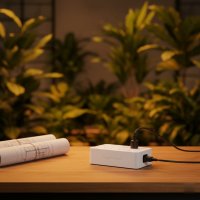
In our increasingly connected world, every home and office is brimming with valuable electronics. From the lightning-fast gaming rig to the family’s smart TV, these devices are the backbone of our digital lives. But lurking in the background is an often-overlooked threat: power surges. These sudden, intense spikes in electrical voltage can wreak havoc on your sensitive gear, leading to costly repairs or even irreversible damage. This is where a robust surge protector steps in, acting as the first line of defense. Among the many options, a 2000 joules surge protector stands out as a critical safeguard, offering a significant level of protection that many modern electronics truly need.

At Wwmsl.com, we understand the intricate dance between electricity and electronics, and our mission is to empower you with the knowledge to protect your investments. Choosing the right surge protector isn’t just about plugging in your devices; it’s about understanding the science behind the shield. Today, we’ll dive deep into why a 2000 joules rating is often the sweet spot for comprehensive protection and what you should look for to ensure your electronics stay safe and sound. For expert surge protectors reviews on this site.
What Does a 2000 Joule Rating Truly Mean for Your Devices?
When you see a “joule rating” on a surge protector, it’s not just a random number; it’s a fundamental measure of the device’s protective capacity. In essence, joules quantify the total amount of energy a surge protector can absorb and dissipate before its internal components fail and it can no longer protect your equipment. Think of it like a digital “energy sponge” or a protective shield.
A 2000 joules surge protector signifies that the unit can withstand up to 2000 joules of cumulative energy from power surges. The higher this number, the more robust the protector’s defense mechanism. This means it can handle larger, more intense single surges, or a greater number of smaller, frequent voltage spikes over time, without compromising the safety of your connected devices. It’s a clear indicator of the protector’s longevity and its ability to offer sustained protection against the unpredictable nature of electrical fluctuations. When a surge hits, the internal components (often Metal Oxide Varistors or MOVs) sacrifice themselves to absorb the excess energy, preventing it from reaching your valuable electronics. With a 2000 joules rating, you’re essentially getting a more durable and reliable shield that can take more “punches” from electrical anomalies.
Why 2000 Joules is a Sweet Spot for Your Electronics
In the spectrum of surge protection, a 2000 joules surge protector typically represents an excellent balance between cost and comprehensive safety for a wide array of modern electronics. While lower joule ratings (under 1000 joules) might suffice for basic, less sensitive items like lamps or phone chargers, they offer minimal protection against anything but the smallest fluctuations. On the other hand, ratings of 3000 joules or higher provide even more robust protection, ideal for whole-home systems or environments with extremely unstable power grids.
However, for most home and office environments, where the risk of severe power surges is moderate, the 1000 to 2000 joules range offers a solid and reliable layer of defense. A 2000 joules surge protector is generally considered sufficient for the majority of household electronics, particularly sensitive or high-value equipment like computers and televisions. It provides ample capacity to guard against common power surges, ensuring your devices remain operational and their sensitive internal circuitry is safeguarded from degradation or sudden failure. This sweet spot ensures you’re not under-protected, nor are you necessarily overspending for protection levels beyond your typical needs, making it a smart and practical choice for discerning consumers.
Devices That Absolutely Benefit from a 2000 Joules Surge Protector
Deciding on the right joule rating for your surge protector often boils down to the value and sensitivity of the electronics you’re trying to protect. For those high-investment, data-rich, or performance-critical devices, a 2000 joules surge protector moves from a recommendation to a near necessity.
Which devices fall into this crucial category?
- High-End Computers & Workstations: Whether it’s a meticulously built gaming PC, a powerful workstation for video editing, or a crucial office desktop, these machines contain sensitive components like motherboards, processors, and graphics cards that are highly vulnerable to voltage spikes. A 2000 joules protector ensures these expensive and vital systems are shielded, preventing data loss and hardware damage.
- Home Theater Systems & HDTVs: Modern high-definition televisions, sound systems, streaming devices, and home theater receivers are sophisticated pieces of equipment. They not only represent a significant financial outlay but are also prone to damage from surges affecting their intricate digital circuitry. A 2000 joules rating provides the necessary buffer.
- Gaming Consoles: From the latest PlayStation to Xbox, gaming consoles are powerful computers designed for entertainment. They house complex processors and graphics units that can be easily compromised by electrical disturbances, leading to freezes, data corruption, or complete failure.
- Network Attached Storage (NAS) & Important Data Devices: Any device that stores irreplaceable data, whether it’s family photos, financial records, or critical business documents, demands superior protection. A 2000 joules surge protector can be the difference between preserving your memories and facing catastrophic data loss.
- Expensive Office Equipment: Multiple monitors, high-speed printers, multi-function devices, and complex communication systems in a home office or small business environment are all candidates for this enhanced level of protection.
As electrical safety expert Dr. Aris Thorne from the Global Institute of Electrical Protection often emphasizes, “Investing in a 2000 joules surge protector for your valuable electronics isn’t an extravagance; it’s a calculated decision to safeguard against the inevitable electrical anomalies that can compromise performance and lead to premature failure. It’s truly peace of mind for your prized tech.”
Beyond the Joules: Other Critical Factors to Consider
While the joule rating is a significant factor, it’s not the only piece of the puzzle when choosing a top-tier 2000 joules surge protector. Several other specifications play a vital role in ensuring comprehensive protection for your electronics.
Clamping Voltage
|
Our Picks for the Best Surge Protector in 2026
As an Amazon Associate I earn from qualifying purchases.
|
||
| Num | Product | Action |
|---|---|---|
| 1 | Belkin 12-Outlet Surge Protector Power Strip w/ 12 AC Outlets & 8ft Flat Plug, UL-listed Heavy-Duty Extension Cord for Home, Office, Travel, Computer, Laptop, Charger - 3,940 Joules of Protection |

|
| 2 | Amazon Basics Surge Protector Power Strip, 6-Outlet, 790 Joules, Circuit Breaker, LED Indicator, 6ft Extension Cord, White |
|
| 3 | 3 Prong GFCI Power Strip with 8 Outlets, 4 USB Ports(2 USB A & 2 USB C), 1050J Surge Protector, 6.56 FT Extension Cord with GFCI Plug (ETL Listed) for Home/Office/Kitchen/Dormitory |
|
| 4 | SUPERDANNY Surge Protector Power Bar with 6 USB Charging Ports, Mountable Flat Plug Power Strip, 22 Widely-Spaced Outlets, 2100 Joules, 8Ft Heavy Duty Extension Cord for Home, Office, Dorm, Black |
|
| 5 | Surge Protector Power Strip - HANYCONY 8 Outlets 4 USB (2 USB C) Charging Ports, Multi Plug Outlet Extender, 5Ft Braided Extension Cord, Flat Plug Wall Mount Desk Charging Station for Home Office ETL |
|
| 6 | Surge Protector Power Strip - Nuetsa Flat Plug Extension Cord with 8 Outlets and 4 USB Ports, 6 Feet Power Cord (1625W/13A), 2700 Joules, ETL Listed, Black |
|
| 7 | Amazon Basics Surge Protector Power Strip, 6-Outlet with 200J Protection, 2ft Extension Cord, Rectangle, Black (2 Pack) |
|
| 8 | Surge Protector Outlet Extender - with Rotating Plug, 6 AC Multi Plug Outlet with 4 USB Ports (2 USB C), 1800J Wall Charger, 3-Sided Power Strip with Spaced Outlet Splitter for Home, Office, Travel |
|
| 9 | Philips 6-Outlet Extender Surge Protector, 2 Pack, Wall Tap, 900 Joules, 3-Prong, Space Saving Design, Protection Indicator LED Light, ETL Listed, White, SPP3466WA/37 |
|
| 10 | Amazon Basics Surge Protector Power Strip, 6-Outlet, 790 Joules, Circuit Breaker, LED Indicator Light, 6ft Extension Cord, Black |
|
The clamping voltage, also known as the let-through voltage, indicates the voltage level at which the surge protector “clamps down” and begins diverting excess electricity away from your devices. A lower clamping voltage means better protection because the protector activates sooner to shield your electronics from damaging spikes. For optimal protection, look for a surge protector with a clamping voltage of 330 volts or lower. Reputable surge protectors are often UL listed, which typically guarantees a clamping voltage of 500V or below, providing a good baseline of safety.
Response Time
The speed at which a surge protector reacts to a power surge is crucial. Measured in nanoseconds, a faster response time means your devices are exposed to harmful voltage spikes for a shorter duration. Aim for a surge protector with a response time of one nanosecond or less. This near-instantaneous reaction can make all the difference in protecting sensitive circuits.
Number of Outlets & Spacing
Consider how many devices you currently need to protect and anticipate any future additions. A 2000 joules surge protector with an adequate number of outlets ensures you don’t have to compromise on protection or resort to risky daisy-chaining. Look for models with widely spaced outlets, especially if you have bulky power adapters, to ensure all ports are usable.
Protection for Data Lines
Power surges don’t just travel through AC outlets. They can also enter your home through coaxial cables (for cable TV/internet), Ethernet lines (for network connections), and telephone lines. For complete protection, especially for home theater systems or networked computers, choose a surge protector that includes inputs/outputs for these data lines, often labeled as “coax protection” or “Ethernet protection.”
Indicator Lights
A critical feature to look for is an indicator light that confirms the surge protector is still actively providing protection. These lights typically show “Protection On” or “Ground OK.” Once the surge protection components have been sacrificed due to absorbing too much energy, this light will usually go out, signaling that it’s time for a replacement. Without such a light, you might mistakenly believe your devices are protected when they are, in fact, vulnerable.
UL Certification
Always ensure your 2000 joules surge protector is certified by Underwriters Laboratories (UL). This independent safety organization tests products to ensure they meet stringent safety standards. A UL listing, particularly UL 1449 (the standard for surge protective devices), provides assurance that the product has been rigorously evaluated for its ability to suppress surges effectively and safely.
The Lifespan of Your 2000 Joules Guardian: When to Replace It
It’s a common misconception that surge protectors last forever. Unfortunately, they don’t. A surge protector’s joule rating represents its total energy absorption capacity, and every time it diverts a surge, a portion of that capacity is consumed. Think of it like a rechargeable battery with a finite number of charge cycles, or perhaps more accurately, a disposable shield that degrades with each impact.
Even a robust 2000 joules surge protector has a finite lifespan. Smaller, daily voltage fluctuations, often unnoticeable to you, slowly chip away at its protective capacity. A single, large power surge can deplete a significant amount of its joule rating, potentially rendering it ineffective almost immediately.
This is why those indicator lights we discussed earlier are so crucial. When the “Protection On” light goes out, it’s a clear signal that your surge protector can no longer absorb surges and needs to be replaced immediately. If your surge protector doesn’t have an indicator light, a general rule of thumb is to replace it every three to five years, or sooner if you’ve experienced any significant power outages or electrical storms. Don’t wait until it’s too late – a “dead” surge protector offers no protection at all, leaving your valuable electronics completely exposed.
Understanding the Threat: What Causes Power Surges?
To truly appreciate the value of a 2000 joules surge protector, it helps to understand the invisible threats it guards against. Power surges aren’t always dramatic lightning strikes; they can be far more subtle and frequent.
Power surges originate from various sources:
- External Factors:
- Lightning Strikes: Even if lightning doesn’t directly hit your home, a nearby strike can send massive voltage spikes through utility lines, creating significant surges that travel into your electrical system.
- Utility Company Issues: Problems at the local power station, grid switching, or downed power lines can cause fluctuations and surges.
- External Heavy Equipment: Large industrial equipment or even neighboring businesses drawing significant power can sometimes induce surges in your local electrical network.
- Internal Factors:
- High-Powered Appliances: The most common source of internal surges is the cycling on and off of high-powered appliances within your own home, such as air conditioners, refrigerators, washing machines, and even vacuum cleaners. These devices draw a lot of power when they start up or shut down, creating momentary voltage spikes that can degrade your sensitive electronics over time.
While whole-home surge protectors are excellent for external threats, individual surge protectors are vital for mitigating internal surges and providing localized, granular protection for your most valuable devices. A 2000 joules surge protector is perfectly positioned to handle both the occasional large external surge and the continuous barrage of smaller internal spikes, acting as a comprehensive defense.
Frequently Asked Questions About 2000 Joules Surge Protectors
Is 2000 joules enough for a gaming PC?
Yes, a 2000 joules surge protector is generally considered sufficient and highly recommended for a gaming PC. Given the sensitive and expensive components within a gaming rig (CPU, GPU, motherboard), this joule rating offers a strong level of protection against voltage spikes and power surges, helping to ensure the longevity and stability of your system. For extremely high-end custom builds or environments with very frequent power issues, some users might opt for 3000 joules or higher for added peace of mind.
How often should I replace a 2000 joules surge protector?
You should replace a 2000 joules surge protector when its indicator light (showing “Protection On”) goes out. If it doesn’t have an indicator light, or if your area experiences frequent power outages or lightning storms, it’s a good practice to replace it every 3 to 5 years. Remember, joule capacity is consumed over time, making older protectors less effective.
Can a power strip protect against surges without a joule rating?
No, a standard power strip that does not explicitly state a joule rating (or “surge protection”) offers no real protection against power surges. It simply provides additional outlets. For true surge protection, always look for a clearly stated joule rating, along with other critical specifications like clamping voltage and UL certification.
What’s the difference between a 2000 joules and 3000 joules surge protector?
The primary difference lies in their energy absorption capacity and thus, their lifespan and ability to handle more severe or frequent surges. A 3000 joules surge protector can absorb 1000 more joules of energy than a 2000 joules surge protector. This means the 3000 joules unit will generally last longer and provide enhanced protection, especially for critical, irreplaceable equipment or in areas prone to very strong or consistent power fluctuations.
Do all surge protectors have indicator lights?
No, not all surge protectors include indicator lights. While it’s a highly recommended feature for monitoring the protection status, some basic or older models may not have one. Always check the product specifications and, ideally, choose a 2000 joules surge protector that includes clear “Protection On” and “Ground OK” indicator lights for your safety and peace of mind.
Final Thoughts: Safeguarding Your Digital Life with Wwmsl
In today’s electrically charged landscape, safeguarding your electronics isn’t just a smart choice—it’s an essential one. A 2000 joules surge protector offers a robust and intelligent defense against the silent threat of power surges, providing crucial peace of mind for your valuable computers, home theater systems, gaming consoles, and other sensitive devices.
By understanding what a joule rating truly means and considering other vital factors like clamping voltage, response time, and UL certification, you can make informed decisions that extend the life of your technology and protect your investments. At Wwmsl, we are committed to being your trusted guide in the world of surge protection, offering expert insights to help you choose, install, and maintain your electrical safeguards safely and effectively. Don’t leave your digital life to chance—empower it with reliable protection. Invest wisely in a quality 2000 joules surge protector today and ensure your electronics stand strong against whatever the grid throws their way.
Get our weekly buyer guide
Practical specs, not advice. Unsubscribe anytime.