A 1000 joules surge protector is an essential device designed to absorb and divert excess electrical energy, protecting connected electronics from damaging power surges. This rating indicates the total amount of energy the protector can absorb before it fails, making it suitable for smaller, less expensive devices like smartphone chargers, lamps, and basic kitchen appliances. For high-value or sensitive electronics, a higher joule rating of 2000 or more is recommended.
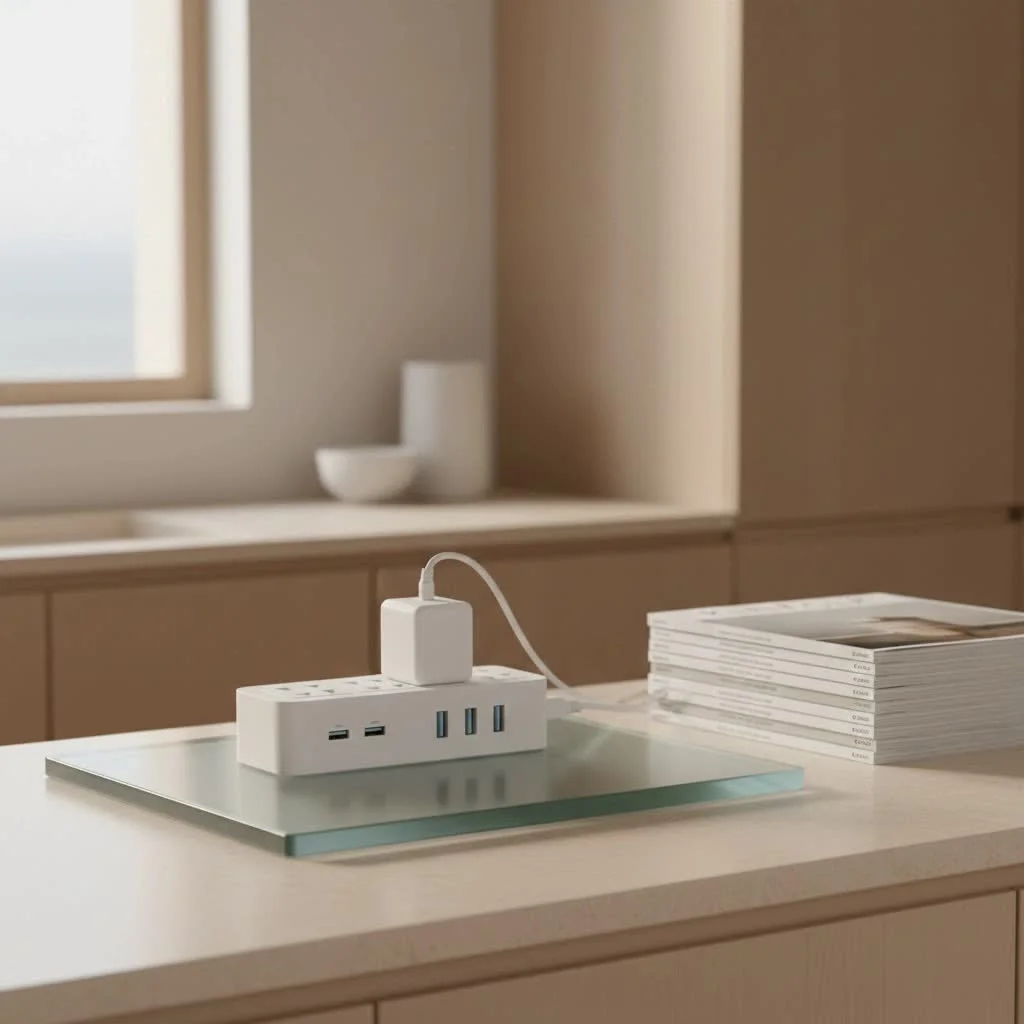 surge protector with multiple outlets” style=”margin: 20px auto;width: 800px;max-width: 100%;height: auto” />
What Does “1000 Joules” Actually Mean for Your Devices?
When a surge protector is rated at “1000 joules,” it signifies the maximum amount of energy the device can absorb before it becomes ineffective or fails. This mechanism acts like a shock absorber for electricity, diverting excess voltage away from your connected electronics during a power spike. This prevents the surge from reaching and potentially damaging sensitive internal components.
A 1000 joules rating is sufficient for handling smaller, more frequent surges caused by utility grid fluctuations, inductive load switching (e.g., when large appliances cycle on/off), or minor home wiring issues. This rating is cumulative; each surge, regardless of its size, gradually depletes the protector’s 1000-joule capacity over time.
Is a 1000 Joules Surge Protector Right for You?
Determining if a 1000 joules rating is adequate depends on the specific electronics you intend to protect. Matching the surge protector’s capacity to the device’s value and sensitivity is crucial for effective defense.
What kind of devices are suitable for a 1000 joules surge protector?
A 1000 joules surge protector is generally ideal for smaller, less expensive, and less critical electronics. This category includes items such as:
- Lamps and bedside lights
- Smartphone chargers
- Tablet chargers
- Small kitchen appliances (e.g., coffee makers, toasters)
- Basic printers or scanners
- Desk fans
- Stereo components that are not high-end
- Modems and routers (a 1000 joules unit is a starting point for basic models, though higher ratings are often better)
These devices typically feature less sensitive circuitry or are more affordable to replace if a significant surge occurs. For everyday conveniences that are not mission-critical, a 1000 joules surge protector offers adequate protection.
When might a 1000 joules unit not be enough?
While 1000 joules provides a good baseline, it is often insufficient for high-value or highly sensitive electronics. For protecting items such as:
- High-end gaming PCs or workstations
- Large flat-screen TVs or home theater systems
- Expensive stereo equipment
- Medical devices
- Server equipment
- Appliances with complex digital controls (e.g., smart refrigerators)
For these items, a surge protector with a significantly higher joule rating, typically 2000 joules and above, is recommended. Top-tier protection can range from 4000-6000 joules. These devices contain intricate microprocessors and delicate components that are more susceptible to even minor voltage irregularities, and their replacement or repair costs are substantially higher.
“Think of joules like an energy ‘bucket’,” explains Samuel Edison, a veteran electrical safety engineer at Wwmsl.com. “A 1000 joules surge protector has a smaller bucket, perfect for splashing away minor ripples. For major waves, or to protect your most valuable possessions, you’ll need a much bigger bucket.”
Understanding Surge Protection: More Than Just Joules
While the joule rating indicates how much energy a surge protector can absorb, it is not the only factor to consider. A truly robust surge protector incorporates several critical elements for comprehensive protection.
What is Clamping Voltage and Why Does it Matter?
|
Our Picks for the Best Surge Protector in 2026
As an Amazon Associate I earn from qualifying purchases.
|
||
| Num | Product | Action |
|---|---|---|
| 1 | Surge Protector Power Strip - HANYCONY 8 Outlets 4 USB (2 USB C) Charging Ports, Multi Plug Outlet Extender, 5Ft Braided Extension Cord, Flat Plug Wall Mount Desk Charging Station for Home Office ETL |

|
| 2 | Amazon Basics Surge Protector Power Strip, 6-Outlet with 200J Protection, 2ft Extension Cord, Rectangle, Black (2 Pack) |
|
| 3 | SUPERDANNY Surge Protector Power Bar with 6 USB Charging Ports, Mountable Flat Plug Power Strip, 22 Widely-Spaced Outlets, 2100 Joules, 8Ft Heavy Duty Extension Cord for Home, Office, Dorm, Black |
|
| 4 | Surge Protector Outlet Extender - with Rotating Plug, 6 AC Multi Plug Outlet with 4 USB Ports (2 USB C), 1800J Wall Charger, 3-Sided Power Strip with Spaced Outlet Splitter for Home, Office, Travel |
|
| 5 | Belkin 12-Outlet Surge Protector Power Strip w/ 12 AC Outlets & 8ft Flat Plug, UL-listed Heavy-Duty Extension Cord for Home, Office, Travel, Computer, Laptop, Charger - 3,940 Joules of Protection |
|
| 6 | Amazon Basics Surge Protector Power Strip, 6-Outlet, 790 Joules, Circuit Breaker, LED Indicator Light, 6ft Extension Cord, Black |
|
| 7 | Philips 6-Outlet Extender Surge Protector, 2 Pack, Wall Tap, 900 Joules, 3-Prong, Space Saving Design, Protection Indicator LED Light, ETL Listed, White, SPP3466WA/37 |
|
| 8 | 3 Prong GFCI Power Strip with 8 Outlets, 4 USB Ports(2 USB A & 2 USB C), 1050J Surge Protector, 6.56 FT Extension Cord with GFCI Plug (ETL Listed) for Home/Office/Kitchen/Dormitory |
|
| 9 | Surge Protector Power Strip - Nuetsa Flat Plug Extension Cord with 8 Outlets and 4 USB Ports, 6 Feet Power Cord (1625W/13A), 2700 Joules, ETL Listed, Black |
|
| 10 | Amazon Basics Surge Protector Power Strip, 6-Outlet, 790 Joules, Circuit Breaker, LED Indicator, 6ft Extension Cord, White |
|
Clamping voltage, also known as let-through voltage, is the maximum voltage a surge protector allows to pass through to your connected devices. A lower clamping voltage indicates better protection because less excess voltage reaches your electronics. For example, a surge protector with a 330V clamping voltage is superior to one with a 400V rating. Always prioritize the lowest possible clamping voltage for sensitive equipment.
How does Response Time affect protection?
Response time refers to how quickly a surge protector can detect and divert excess voltage. Measured in nanoseconds, a faster response time means your devices are exposed to the harmful surge for a shorter duration. Aim for a response time of less than one nanosecond (ns) for optimal protection, as even a fraction of a second can prevent damage.
Why is a UL Rating important for electrical safety?
The Underwriters Laboratories (UL) rating, specifically UL 1449 (Standard for Surge Protective Devices), confirms that a surge protector meets rigorous safety and performance standards. This certification assures that the device has been tested for its ability to suppress surges effectively and safely. Always choose surge protectors with this certification to guarantee reliability and prevent potential hazards like overheating or fire.
What other features should I look for in a surge protector?
Beyond joules, clamping voltage, and response time, consider these helpful features:
- Indicator Lights: Many surge protectors include “Protection On” and “Grounding OK” indicator lights. These are vital; if the “Protection On” light goes out, your surge protector has absorbed its maximum energy and requires replacement.
- EMI/RFI Filtration: Electromagnetic Interference (EMI) and Radio Frequency Interference (RFI) can cause “dirty power,” resulting in buzzing sounds or distorted images. Filters reduce this noise, providing cleaner power to your devices.
- Data Line Protection: Surges can also travel through data lines. Look for models that offer protection for Ethernet, coaxial, or phone lines if you connect devices through these pathways.
How Do Surge Protectors Work Their Magic?
Most surge protectors utilize Metal Oxide Varistors (MOVs) as their core components. These devices are designed to divert excess voltage. Under normal operating conditions, MOVs act as resistors with very high resistance, allowing electricity to flow smoothly. However, when a surge occurs and voltage spikes above a safe level, the MOV’s resistance rapidly drops, creating a short circuit that shunts the excess voltage and current away from your electronics. This process occurs in mere nanoseconds, protecting your gear. Over time, each surge causes a tiny bit of degradation to the MOVs, which explains why surge protectors have a finite lifespan, regardless of their joule rating.
Choosing the Best Surge Protector: A Holistic View
Selecting the right surge protector involves understanding your specific needs and environment.
How do I assess my devices’ protection needs?
Inventory your electronics and categorize them by value and sensitivity. A lamp requires less protection than a new 4K TV. Consider the cumulative value of all items plugged into a single protector. For multi-thousand-dollar setups, invest in robust protection.
How do potential surge risks impact my choice?
Your location influences your choice. If you are in an area prone to lightning storms or live in an older building with potentially unreliable wiring, higher joule ratings and more comprehensive protection are advisable. Even in stable areas, internal surges from appliances remain a threat.
Should I worry about protecting data lines as well?
Yes, absolutely. Surges can travel through data lines such as Ethernet cables connected to your router, coaxial cables for cable TV, or telephone lines. If your surge protector only covers AC outlets, these other pathways remain vulnerable. For complete protection, choose a unit that includes surge suppression for all relevant data lines.
FAQ
How long do 1000 joules surge protectors last?
The lifespan of a 1000 joules surge protector depends on the frequency and intensity of power surges it encounters. Each absorbed surge depletes its capacity. Generally, a surge protector should be replaced every 3-5 years, or immediately after a significant power event like a nearby lightning strike, even if the protection indicator light is still on. If the protection light is off, it requires immediate replacement.
Can a 1000 joules surge protector protect against lightning?
A 1000 joules surge protector offers some defense against indirect lightning strikes or surges induced by distant strikes traveling through power lines. However, no consumer-grade surge protector can guarantee protection against a direct lightning hit, which carries billions of joules of energy. For robust lightning protection, a whole-home surge protector installed at your electrical panel is recommended in conjunction with point-of-use protectors.
What’s the difference between a surge protector and a power strip?
A power strip simply provides multiple electrical outlets from a single wall socket and offers no surge protection. A surge protector, conversely, contains internal components like Metal Oxide Varistors (MOVs) designed to divert and absorb excess voltage, thereby protecting connected devices from power surges. While all surge protectors are power strips, not all power strips are surge protectors. Always check for a joule rating to confirm it is a true protector.
When should I upgrade from a 1000 joules unit?
You should consider upgrading from a 1000 joules surge protector if you acquire new, more expensive, or more sensitive electronic devices, such as a gaming PC, a large TV, or professional audio equipment. If your current 1000 joules unit is old, its internal components may have degraded, making it less effective. If you frequently experience power fluctuations or live in an area with common electrical issues, a higher joule rating (2000+ joules) provides a greater safety margin.
Are all 1000 joules surge protectors the same quality?
No, not all 1000 joules surge protectors are created equal. While they share the same energy absorption rating, their quality varies significantly based on factors such as brand reputation, construction materials, the quality of their MOVs, clamping voltage, response time, and additional features like EMI/RFI filtration and data line protection. Always look for reputable brands and ensure the device has a UL 1449 certification for peace of mind.
Final Thoughts on Your Power Protection
Investing in a 1000 joules surge protector is a smart move for protecting your everyday electronics from constant power fluctuations. It’s an affordable, effective way to shield less demanding devices from harm and extend their lifespan. while a 1000 joules unit serves as a solid baseline, understanding its limitations and knowing when to opt for higher-rated protection for your more valuable gear is crucial. Take the time to assess your needs, compare features, and choose wisely. Your electronics will thank you for it, staying operational and safe for years to come. Don’t leave your devices exposed; give them the protection they deserve.
Frequently Asked Questions
How long do 1000 joules surge protectors typically last?
The lifespan of a 1000 joules surge protector varies based on the frequency and intensity of power surges it encounters. Each absorbed surge depletes its joule capacity. Generally, these protectors should be replaced every 3-5 years, or immediately after a significant power event like a lightning strike, even if the protection indicator light is still on. If the protection light is off, replacement is required immediately.
Can a 1000 joules surge protector protect against lightning strikes?
A 1000 joules surge protector offers some defense against indirect lightning strikes or surges induced by distant strikes traveling through power lines. However, no consumer-grade surge protector can guarantee protection against a direct lightning hit, which carries billions of joules of energy. For robust lightning protection, a whole-home surge protector installed at your electrical panel is recommended in conjunction with point-of-use protectors.
What is the key difference between a surge protector and a power strip?
A power strip simply provides multiple electrical outlets from a single wall socket and offers no surge protection. A surge protector, conversely, contains internal components like Metal Oxide Varistors (MOVs) designed to divert and absorb excess voltage, thereby protecting connected devices from power surges. While all surge protectors are power strips, not all power strips are surge protectors. Always check for a joule rating to confirm it is a true protector.
When should I consider upgrading from a 1000 joules surge protector?
You should consider upgrading from a 1000 joules surge protector if you acquire new, more expensive, or more sensitive electronic devices, such as a gaming PC, a large TV, or professional audio equipment. Additionally, if your current 1000 joules unit is old, its internal components may have degraded, making it less effective. If you frequently experience power fluctuations or live in an area with common electrical issues, a higher joule rating (2000+ joules) provides a greater safety margin.
Are all 1000 joules surge protectors of the same quality?
No, not all 1000 joules surge protectors are created equal. While they share the same energy absorption rating, their quality varies significantly based on factors such as brand reputation, construction materials, the quality of their MOVs, clamping voltage, response time, and additional features like EMI/RFI filtration and data line protection. Always look for reputable brands and ensure the device has a UL 1449 certification for peace of mind.
Get our weekly buyer guide
Practical specs, not advice. Unsubscribe anytime.
I got one of these for my TV, thinking it would be enough. While it works, I later realized that for high-value electronics like a big screen TV, a higher joule rating would be much better. It’s fine for now, but I wish I’d understood the difference more clearly before buying.
I picked up a 1000 joules surge protector for my bedside lamp and phone charger, and it’s been great. We get occasional power flickers here, and I always worried about my phone. It’s reassuring to know these smaller devices are now protected without needing to spend a fortune on a higher-rated unit.
This was a good reminder about matching the joule rating to the device. I used to just buy whatever was on sale. Now I understand why a 1000 joules protector is perfect for my basic kitchen appliances like the toaster and coffee maker, but I’ll definitely get something with 2000+ joules for my home office setup.
Living in an area with frequent thunderstorms, power surges are a real concern. I’ve been using a 1000 joules protector for my smart speaker and a few other small gadgets, and it gives me peace of mind. It’s good to know these devices are absorbing the excess electrical energy and keeping my electronics safe.