In the heart of every home, the kitchen buzzes with an array of modern appliances, each a testament to convenience and culinary innovation. From smart refrigerators that keep your groceries fresh to high-tech blenders that craft your morning smoothie, these devices are more than just tools – they’re vital to your daily life. But what happens when the electricity they rely on decides to throw a surprise party in the form of a power surge? That’s where the unsung hero, the Surge Protector For Kitchen Appliances, steps in.
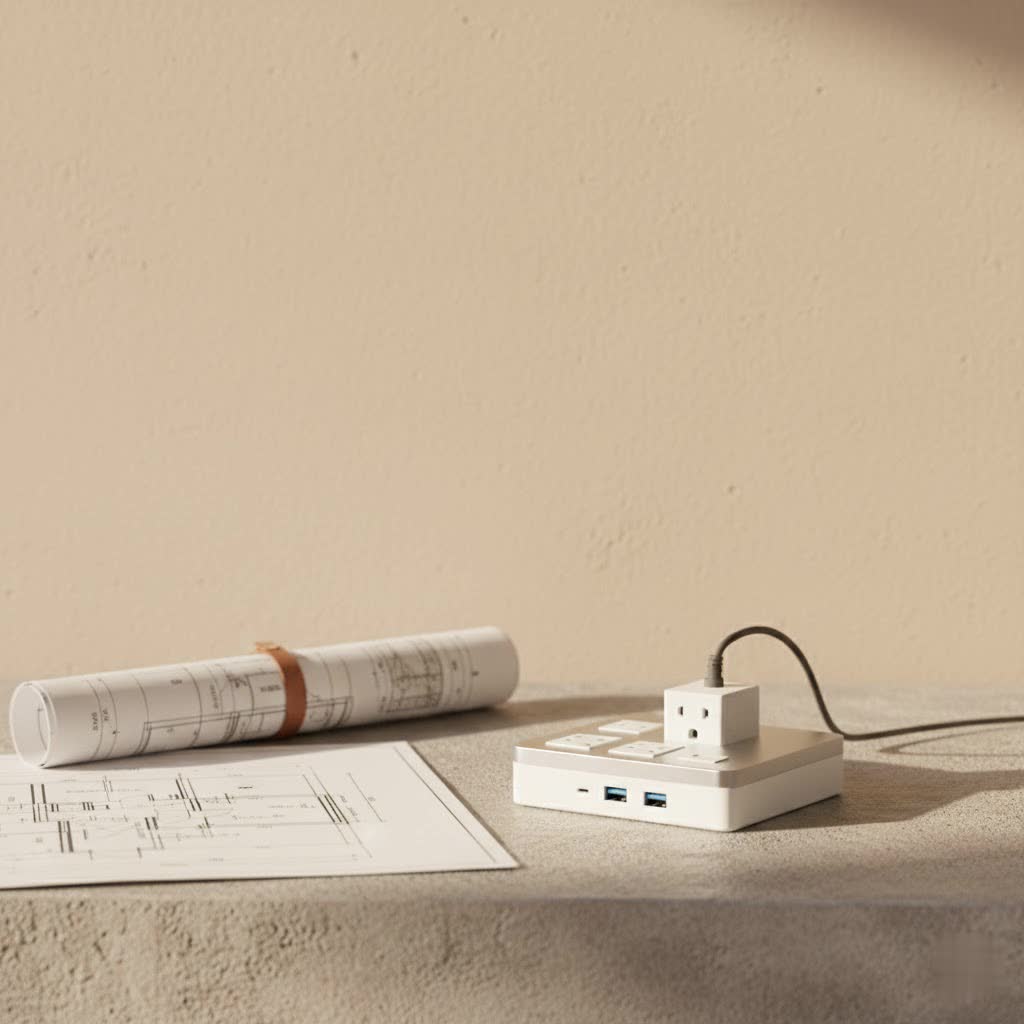
As someone with over two decades immersed in the world of electrical protection and a key contributor to Wwmsl.com, I’ve seen firsthand the havoc a simple power spike can wreak on expensive kitchen electronics. Imagine losing your meticulously programmed smart oven or, worse, having your refrigerator’s delicate control board fried. It’s not just an inconvenience; it’s a significant financial blow. This guide will walk you through everything you need to know, empowering you to make informed decisions and confidently protect your culinary investments.
What Exactly is a Power Surge, and Why Should Your Kitchen Care?
Let’s demystify power surges. At its core, a power surge is a sudden, often brief, spike in electrical voltage that exceeds the normal flow of electricity. Think of your household electricity as water flowing through a pipe; a surge is like a sudden, unexpected burst of pressure that can damage anything connected downstream. These aren’t always dramatic lightning strikes (though those are certainly a major cause!); everyday events like fluctuations in the utility grid, sudden changes in power demand (like when a large appliance cycles on or off), or even faulty wiring within your home can trigger smaller, but still damaging, “mini-surges” or transient voltages.
Modern kitchen appliances are packed with sensitive microprocessors and electronic components. Unlike older, purely mechanical appliances, today’s smart coffee makers, induction cooktops, and refrigerators are highly vulnerable to these voltage spikes. Even minor, frequent surges can degrade their performance over time, shortening their lifespan and leading to costly repairs or premature replacements. Protecting them isn’t an overcaution; it’s a necessity in our electronically dependent world.
Why Your Kitchen Appliances Are Prime Candidates for Protection
Your kitchen is arguably the most electronically dense room in your house, home to some of your most valuable and frequently used appliances. Consider the lineup:
- Refrigerators: These run 24/7, often featuring complex electronic control boards, ice makers, and water dispensers. They are particularly susceptible to damage from voltage fluctuations, and a specialized surge protector with a delay feature is often recommended.
- Microwaves & Ovens: Modern versions boast digital displays, touch controls, and intricate programming, all of which are sensitive to power spikes.
- Dishwashers: Electronic controls manage wash cycles, water temperatures, and drying functions.
- Small Appliances: From your espresso machine and stand mixer to your air fryer and high-speed blender, these devices, while smaller, still contain delicate circuitry that can be easily damaged.
- Smart Kitchen Gadgets: Any appliance with Wi-Fi connectivity or smart features is inherently more complex and, consequently, more vulnerable.
The cumulative cost of repairing or replacing even one of these essential kitchen items far outweighs the small investment in proper surge protection. “Many people only think of surge protectors for computers, but the truth is, your refrigerator or smart oven is just as, if not more, critical to your home’s daily rhythm,” explains John Miller, Senior Electrical Safety Analyst at Wwmsl.com. “Protecting them is simply smart household management.”
Key Factors to Consider When Choosing a Surge Protector for Your Kitchen
Selecting the right surge protector isn’t a one-size-fits-all endeavor, especially for the diverse needs of your kitchen. Here’s what to keep in mind:
Joule Rating: Your First Line of Defense
The joule rating indicates how much energy a surge protector can absorb before it fails. For kitchen appliances, you want a higher joule rating.
- General Small Appliances: A minimum of 600-1000 joules is a good starting point for things like toasters, blenders, or coffee makers.
- Major Appliances (Refrigerators, Microwaves, Ovens): Aim for 1500 joules or higher. The more expensive and sensitive the appliance, the higher the joule rating you should consider. Some heavy-duty options go up to 3000-4000 joules, offering robust protection.
|
Our Picks for the Best Surge Protector in 2026
As an Amazon Associate I earn from qualifying purchases.
|
||
| Num | Product | Action |
|---|---|---|
| 1 | SUPERDANNY Surge Protector Power Bar with 6 USB Charging Ports, Mountable Flat Plug Power Strip, 22 Widely-Spaced Outlets, 2100 Joules, 8Ft Heavy Duty Extension Cord for Home, Office, Dorm, Black |

|
| 2 | Surge Protector Power Strip - HANYCONY 8 Outlets 4 USB (2 USB C) Charging Ports, Multi Plug Outlet Extender, 5Ft Braided Extension Cord, Flat Plug Wall Mount Desk Charging Station for Home Office ETL |
|
| 3 | Amazon Basics Surge Protector Power Strip, 6-Outlet, 790 Joules, Circuit Breaker, LED Indicator Light, 6ft Extension Cord, Black |
|
| 4 | Amazon Basics Surge Protector Power Strip, 6-Outlet, 790 Joules, Circuit Breaker, LED Indicator, 6ft Extension Cord, White |
|
| 5 | Surge Protector Power Strip - Nuetsa Flat Plug Extension Cord with 8 Outlets and 4 USB Ports, 6 Feet Power Cord (1625W/13A), 2700 Joules, ETL Listed, Black |
|
| 6 | Surge Protector Outlet Extender - with Rotating Plug, 6 AC Multi Plug Outlet with 4 USB Ports (2 USB C), 1800J Wall Charger, 3-Sided Power Strip with Spaced Outlet Splitter for Home, Office, Travel |
|
| 7 | Amazon Basics Surge Protector Power Strip, 6-Outlet with 200J Protection, 2ft Extension Cord, Rectangle, Black (2 Pack) |
|
| 8 | Belkin 12-Outlet Surge Protector Power Strip w/ 12 AC Outlets & 8ft Flat Plug, UL-listed Heavy-Duty Extension Cord for Home, Office, Travel, Computer, Laptop, Charger - 3,940 Joules of Protection |
|
| 9 | Philips 6-Outlet Extender Surge Protector, 2 Pack, Wall Tap, 900 Joules, 3-Prong, Space Saving Design, Protection Indicator LED Light, ETL Listed, White, SPP3466WA/37 |
|
| 10 | 3 Prong GFCI Power Strip with 8 Outlets, 4 USB Ports(2 USB A & 2 USB C), 1050J Surge Protector, 6.56 FT Extension Cord with GFCI Plug (ETL Listed) for Home/Office/Kitchen/Dormitory |
|
Number and Type of Outlets
Consider how many appliances you need to plug in and their plug sizes.
- Multiple AC Outlets: Look for surge protectors with at least 6-8 AC outlets to accommodate your kitchen’s needs.
- Wide Spacing: Many kitchen appliances have bulky power adapters. Opt for models with widely spaced outlets or rotating outlets to ensure all your plugs can fit without blocking each other.
- USB Charging Ports: While not for major appliances, integrated USB-A and USB-C ports can be convenient for charging phones, tablets, or small kitchen gadgets that require USB power, freeing up AC outlets.
Safety Certifications & Features
Safety is paramount.
- ETL or UL Certification: Ensure the surge protector is certified by a reputable safety organization like ETL or Underwriters Laboratories (UL). This indicates it meets stringent safety standards.
- Integrated Circuit Breaker: This vital feature automatically shuts off power if the circuit is overloaded, preventing overheating and potential fires.
- Auto-Shutdown Technology: Some advanced surge protectors can detect when they’ve absorbed their maximum joules and automatically cut power, preventing unprotected electricity from reaching your devices.
- LED Indicators: Look for lights that clearly indicate “Protection On” and “Grounded.” If the “Protection On” light goes out, it’s a sign the surge protector has done its job and needs replacement.
Cord Length and Type
Practicality meets safety here.
- Appropriate Length: Choose a cord length that comfortably reaches your outlet without being excessively long (which can create trip hazards) or too short (forcing you to stretch it taut).
- Heavy-Duty Gauge: For surge protectors that will handle multiple kitchen appliances, especially high-wattage ones, a 14-gauge wire is recommended for durability and safe power delivery. Avoid thin, flimsy cords.
Form Factor and Design
Kitchens often have limited counter space.
- Power Strips: The most common form, offering multiple outlets in a linear design. Some are wall-mountable, which can save counter space.
- Wall Taps/Outlet Extenders: These plug directly into a wall outlet, expanding it into multiple outlets. They are great for tight spaces or when you only need a few extra ports. Many modern wall taps also include USB ports.
- Flat Plugs: A flat, right-angle plug can be incredibly useful if your outlet is behind an appliance or furniture, allowing it to sit flush against the wall.
Specialized Features for Major Appliances (e.g., Refrigerators)
Refrigerators are a special case due to their continuous operation and sensitive compressors.
- Voltage Monitoring: Some surge protectors designed for refrigerators will continuously monitor incoming voltage and temporarily cut power if it drops too low (brownout) or spikes too high.
- Delay Restart: A crucial feature for refrigerators is a built-in delay (often 3 minutes) before restoring power after an outage or fluctuation. This allows the compressor to equalize pressure, preventing damage from rapid cycling.
Setting Up Your Kitchen Surge Protection System
Once you’ve chosen the right surge protectors, proper setup is key to maximizing their effectiveness and ensuring safety.
- Strategic Placement: Locate surge protectors away from sinks, water sources, and heat-generating appliances like stoves or ovens. While some have robust casings, they are generally not waterproof.
- Avoid Daisy-Chaining: Never plug one surge protector into another. This can overload the circuit and negate the protection. Each surge protector should plug directly into a wall outlet.
- Dedicated Circuits for High-Draw Appliances: Ideally, major appliances like refrigerators, electric ovens, and dishwashers should be on dedicated circuits. If not, ensure their surge protectors are appropriately rated for the load.
- Check Indicators Regularly: Periodically glance at the “Protected” indicator light. If it’s off, your surge protector has sacrificed itself for your devices and needs replacement.
Debunking Common Myths and FAQs
Let’s clear up some common misconceptions about surge protectors for your kitchen.
Are surge protectors waterproof or water-resistant for kitchen use?
Generally, no. Most standard surge protectors are not designed to be waterproof or resistant to direct water exposure. While some might offer minimal splash protection, placing them near sinks or areas where they could get wet is a significant safety hazard. Always keep them in dry locations.
Can a surge protector prevent electrical fires in the kitchen?
Surge protectors can reduce the risk of electrical fires caused by power surges by cutting off power during an overload. However, they are not a fire prevention solution for all electrical issues (e.g., faulty wiring, damaged appliance cords, or internal appliance malfunctions). They protect against voltage spikes, not necessarily all forms of electrical failure.
How often should I replace my surge protector?
Surge protectors have a finite lifespan. Each time they absorb a surge, a small amount of their protective capacity is used up. After a major surge (like a lightning strike), they should be replaced immediately. Even without noticeable surges, the protective components degrade over time. A good rule of thumb is to replace them every 3-5 years, or if the “Protected” indicator light goes out.
Will a surge protector affect my appliance’s performance?
No, a properly rated surge protector will not affect your appliance’s performance. Its job is to allow normal voltage to pass through while diverting or blocking harmful spikes. If you notice performance issues, it’s likely unrelated to the surge protector itself, assuming it’s correctly chosen and functioning.
How do I know if my kitchen needs a surge protector?
If you have any electronic kitchen appliances – and almost all modern appliances do – you need a surge protector. This is especially true for expensive items like refrigerators, microwaves, and smart appliances. Any area prone to power outages, flickering lights, or where heavy machinery (like air conditioners) operates on the same grid can benefit significantly.
The Wwmsl.com Promise: Protect Your Passion
Your kitchen is more than just a place to cook; it’s where memories are made, families gather, and culinary passions come to life. Protecting your investment in that space isn’t just about preserving electronics; it’s about safeguarding your lifestyle.
At Wwmsl.com, we believe that understanding surge protection empowers you to take control of your home’s electrical safety. By choosing the right surge protectors for your kitchen appliances, you’re not just buying a device; you’re investing in peace of mind, extending the life of your valuable equipment, and ensuring your culinary adventures remain uninterrupted by unexpected power events. Take action today, evaluate your kitchen’s needs, and equip it with the best defense against the unpredictable world of electricity. Your appliances—and your wallet—will thank you!
