A power surge protector with USB combines essential electrical surge protection for electronics with the convenience of integrated USB charging ports. This dual-function device safeguards valuable gear from unexpected electrical spikes while simultaneously charging USB-powered devices like smartphones and tablets without requiring extra wall adapters. It is an all-in-one solution for modern homes and offices, offering both safety and streamlined charging.
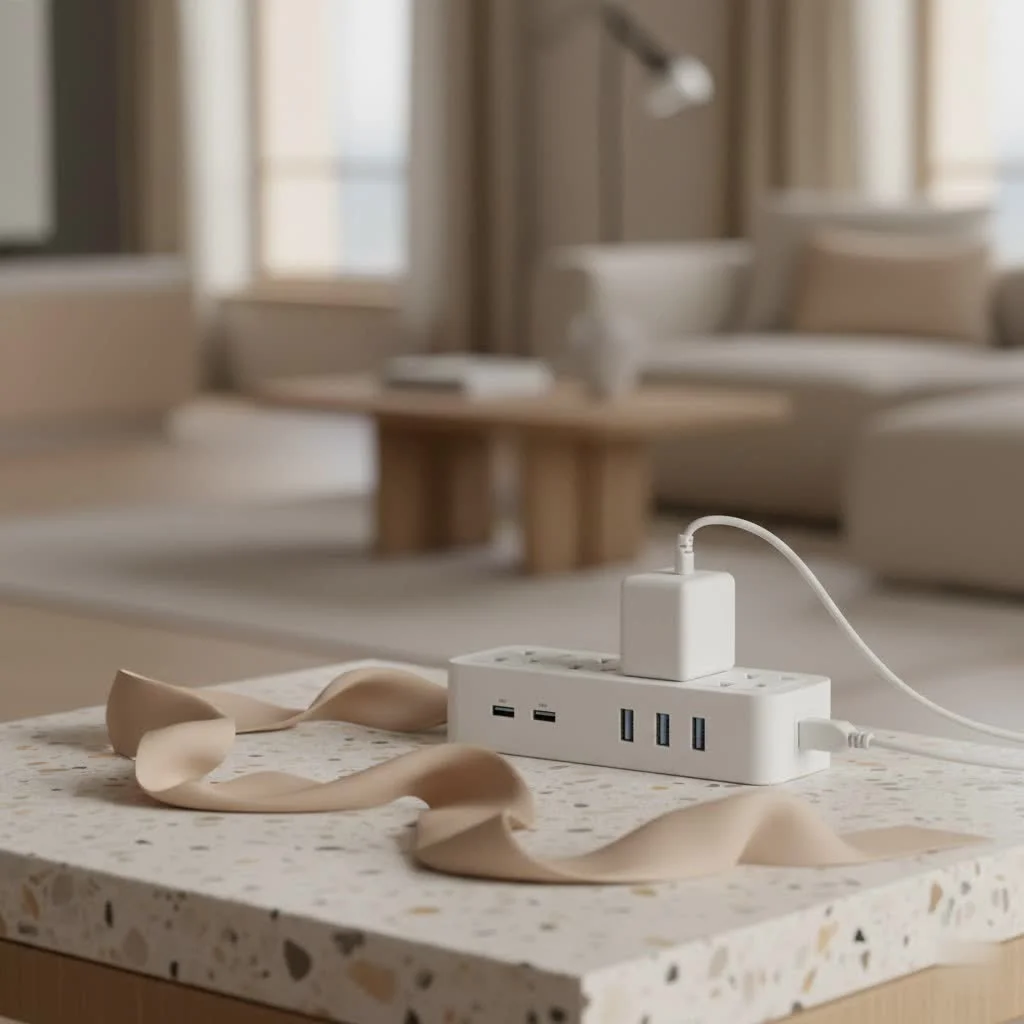
Why You Need a Power Surge Protector with USB: Protection Meets Convenience
Think of a power surge protector as a vigilant bodyguard for your electronics. Power surges, those sudden spikes in voltage, can happen for many reasons: lightning strikes, fluctuations in the power grid, or even the cycling of heavy appliances in your home. Without protection, these surges can fry your devices, corrupt data, and significantly shorten their lifespan. A dedicated surge protector diverts this excess electricity away from your sensitive equipment, absorbing the impact and keeping your devices safe.
Now, imagine that same protection combined with dedicated USB charging ports. No more hunting for wall adapters, no more sacrificing an AC outlet just to charge your phone. A power surge protector with USB integrates these ports directly, making it an all-in-one charging station. This dual functionality is a major upgrade for decluttering your space and ensuring all your devices, both traditional and USB-powered, are well-protected and ready to go.
Beyond Just Outlets: The Dual Power of USB Ports
Modern surge protectors have evolved far beyond simple power strips. The inclusion of USB ports transforms them into versatile power hubs. You’ll typically find a mix of:
- USB-A Ports: The classic rectangular ports, still widely used for many accessories and older devices.
- USB-C Ports: The newer, reversible standard, essential for fast charging modern smartphones, tablets, and even some laptops. Many models now include USB-C with Power Delivery (PD) for rapid charging capabilities, meaning your devices can charge much faster than with standard USB-A ports.
This mix ensures compatibility with virtually all your portable electronics, streamlining your charging routine and reducing the number of bulky adapters you need to plug into the AC outlets.
Decoding the Specs: What to Look For in Your Next Power Surge Protector with USB
Choosing the right power surge protector with USB isn’t just about grabbing the first one you see. There are several key features to consider to ensure you get the best protection and functionality for your needs.
Joules Rating: Your First Line of Defense
The joule rating is arguably the most critical specification. It tells you how much energy a surge protector can absorb before it fails. Think of it as the protector’s “shield strength.”
- For basic protection of small electronics like lamps or chargers, a rating of 600-1000 joules might suffice.
- For valuable and sensitive electronics like computers, gaming consoles, home theater systems, or office equipment, aim for a minimum of 2000 joules or higher. A higher joule rating means the device can handle more severe or frequent surges, offering greater peace of mind.
Outlet Count and Spacing: Making Room for Everything
Consider how many devices you need to power. Surge protectors come with varying numbers of AC outlets, typically ranging from 6 to 12. More isn’t always better if the outlets are crammed together. Look for models with:
- Ample Outlet Spacing: This is crucial for accommodating those bulky power adapters (often called “wall warts”) that can block adjacent outlets on poorly designed power strips. Wide spacing ensures you can utilize every single outlet.
- Rotatable Outlets: Some advanced designs feature rotating outlets, offering even more flexibility for odd-shaped plugs.
USB Power: Ampere, Wattage, and Type
Beyond just having USB ports, consider their charging capabilities:
- Amperage (Amps) / Wattage (Watts): Look for USB ports that deliver sufficient power. For fast charging smartphones and tablets, individual ports should offer at least 2.4 Amps (or 12 Watts) for USB-A, and USB-C Power Delivery ports can range from 18W to 65W or more for rapid charging of larger devices.
- Smart Charging Technology: Many surge protectors include “smart” USB ports that automatically detect your device and deliver the optimal charging speed, preventing overcharging and ensuring efficient power delivery.
Essential Safety Features: More Than Just a Light
A truly reliable power surge protector with USB goes beyond basic surge suppression:
- UL Certification: Always look for a UL (Underwriters Laboratories) certification mark. This indicates that the product has been rigorously tested and meets strict safety standards.
- Indicator Lights: Most quality surge protectors have indicator lights to show when the unit is grounded and when the surge protection is active. If the “protection active” light goes out, it means the surge protection has been used up, and the unit needs replacement.
- Circuit Breaker: An integrated circuit breaker will trip and cut power in case of an overload, preventing damage to your devices and potential fire hazards.
- Auto-Shutoff: Some advanced models feature an auto-shutoff function, where the unit will automatically disconnect power to your devices if the surge protection fails after a major event.
- EMI/RFI Filtering: Electromagnetic interference (EMI) and Radio Frequency Interference (RFI) can degrade audio and video quality. Filtering helps keep your sensitive electronics running smoothly.
Cord Length and Plug Type: Flexibility Where You Need It
The physical design elements also play a role in usability:
- Cord Length: A longer cord (e.g., 6-10 feet) offers greater flexibility in placement, especially if your wall outlets aren’t conveniently located.
- Flat Plug: A flat-profile plug that sits flush against the wall is ideal for fitting behind furniture or in tight spaces, preventing damage to the cord and providing a neater appearance.
Warranty and Connected Equipment Coverage: Peace of Mind
Don’t overlook the warranty! Good manufacturers offer:
- Product Warranty: Covers defects in the surge protector itself.
- Connected Equipment Warranty: This is a crucial benefit. It’s a guarantee from the manufacturer that if your properly connected equipment is damaged by a power surge while plugged into their protector, they will repair or replace it up to a specified monetary limit (e.g., $200,000). This demonstrates the manufacturer’s confidence in their product’s protective abilities.
Expert Insight on Longevity and Placement
|
Our Picks for the Best Surge Protector in 2026
As an Amazon Associate I earn from qualifying purchases.
|
||
| Num | Product | Action |
|---|---|---|
| 1 | Surge Protector Power Strip - HANYCONY 8 Outlets 4 USB (2 USB C) Charging Ports, Multi Plug Outlet Extender, 5Ft Braided Extension Cord, Flat Plug Wall Mount Desk Charging Station for Home Office ETL |

|
| 2 | Amazon Basics Surge Protector Power Strip, 6-Outlet, 790 Joules, Circuit Breaker, LED Indicator Light, 6ft Extension Cord, Black |
|
| 3 | 3 Prong GFCI Power Strip with 8 Outlets, 4 USB Ports(2 USB A & 2 USB C), 1050J Surge Protector, 6.56 FT Extension Cord with GFCI Plug (ETL Listed) for Home/Office/Kitchen/Dormitory |
|
| 4 | Amazon Basics Surge Protector Power Strip, 6-Outlet, 790 Joules, Circuit Breaker, LED Indicator, 6ft Extension Cord, White |
|
| 5 | Belkin 12-Outlet Surge Protector Power Strip w/ 12 AC Outlets & 8ft Flat Plug, UL-listed Heavy-Duty Extension Cord for Home, Office, Travel, Computer, Laptop, Charger - 3,940 Joules of Protection |
|
| 6 | Philips 6-Outlet Extender Surge Protector, 2 Pack, Wall Tap, 900 Joules, 3-Prong, Space Saving Design, Protection Indicator LED Light, ETL Listed, White, SPP3466WA/37 |
|
| 7 | SUPERDANNY Surge Protector Power Bar with 6 USB Charging Ports, Mountable Flat Plug Power Strip, 22 Widely-Spaced Outlets, 2100 Joules, 8Ft Heavy Duty Extension Cord for Home, Office, Dorm, Black |
|
| 8 | Surge Protector Outlet Extender - with Rotating Plug, 6 AC Multi Plug Outlet with 4 USB Ports (2 USB C), 1800J Wall Charger, 3-Sided Power Strip with Spaced Outlet Splitter for Home, Office, Travel |
|
| 9 | Amazon Basics Surge Protector Power Strip, 6-Outlet with 200J Protection, 2ft Extension Cord, Rectangle, Black (2 Pack) |
|
| 10 | Surge Protector Power Strip - Nuetsa Flat Plug Extension Cord with 8 Outlets and 4 USB Ports, 6 Feet Power Cord (1625W/13A), 2700 Joules, ETL Listed, Black |
|
“Choosing a robust power surge protector with USB is a smart move, but don’t just plug it in and forget about it,” advises Dr. Elara Vance, Chief Electrical Engineer at Wwmsl Labs. “Regularly check the indicator lights to ensure it’s still actively protecting your devices. Think of it as an insurance policy – it’s there when you need it most, but its capacity isn’t infinite. Proper placement, away from heat sources and in a well-ventilated area, is also key to its optimal performance and longevity.”
When to Say Goodbye: Replacing Your Power Surge Protector with USB
Surge protectors are sacrificial components, meaning they absorb surges to protect your devices, and in doing so, their protective capacity gets used up. It’s not a “set it and forget it” device.
- After a Major Surge Event: If your home experiences a significant power surge, especially due to a lightning strike, replace your surge protector immediately, even if it appears to be working.
- Indicator Lights Off: If the “protection active” or “grounded” indicator light on your surge protector goes out or blinks erratically, it signals that the unit has likely sacrificed its life to save your electronics and no longer offers full protection.
- Every 3-5 Years: Even without a major event, a surge protector’s effectiveness can degrade over time due to smaller, imperceptible surges. A general rule of thumb is to replace it every three to five years to ensure continued optimal protection.
Power Strip vs. Surge Protector: Know the Difference
It’s a common misconception that all multi-outlet strips offer surge protection. They don’t! A basic power strip simply provides more outlets, distributing power but offering no defense against voltage spikes.
The key differentiator is the joule rating. If a product doesn’t explicitly list a joule rating, it’s just a power strip, not a surge protector. Always look for a clear joule rating and the other safety features discussed to ensure you’re getting genuine protection. You should also never plug one surge protector into another, or a power strip into a surge protector, as this can create a fire hazard and void warranties.
Stay Powered, Stay Secure with a Power Surge Protector with USB
In our increasingly electronic world, protecting our valuable devices is paramount. A power surge protector with USB offers a modern, efficient, and highly effective solution, combining robust defense against harmful power surges with the everyday convenience of integrated USB charging. By understanding the key features like joule rating, outlet configuration, and safety certifications, you can confidently choose a device that not only powers your gadgets but also keeps them safe for years to come. Invest in quality protection today and keep your digital life running smoothly, no matter what electrical surprises come your way.
Get our weekly buyer guide
Practical specs, not advice. Unsubscribe anytime.
I bought a model that was recommended for gaming setups, specifically for its response time. It works fine for my console and TV, and the USB ports are handy for my controller chargers. However, one of the USB-A ports stopped working after about a month, which is a bit disappointing. The surge protection itself seems to be holding up, though.
This guide really helped me pick out a good surge protector with USB. I was tired of having a million chargers plugged into every outlet. The one I got has enough joule rating for my home office setup, and the USB-C port is super fast for my laptop. My only minor gripe is that the cord could be a foot longer, but it’s not a dealbreaker.
This is exactly what I needed for my entertainment center. I used to have a separate USB hub and a basic power strip, but this combines everything into one neat unit. It’s great to have peace of mind that my expensive TV and sound system are safe from power fluctuations, especially with all the heavy appliances cycling in my building.
I finally upgraded to one of these after my old strip died during a storm. The integrated USB ports are a game-changer for my nightstand. I can charge my phone and tablet directly without hunting for those bulky wall adapters. It’s so much cleaner and I feel way more secure knowing my electronics are protected from any sudden voltage spikes.