In our increasingly connected lives, every home and office is brimming with sensitive electronics – from your essential work laptop and smart TV to charging phones and kitchen gadgets. While we often take our electrical outlets for granted, the power flowing through them isn’t always perfectly stable. Sudden, invisible spikes in electricity, known as power surges, pose a constant threat, capable of frying delicate circuits and rendering your beloved devices useless. This is where the unsung hero, the wall socket surge protector, steps in, acting as a vigilant guardian for your valuable electronics right at the source.
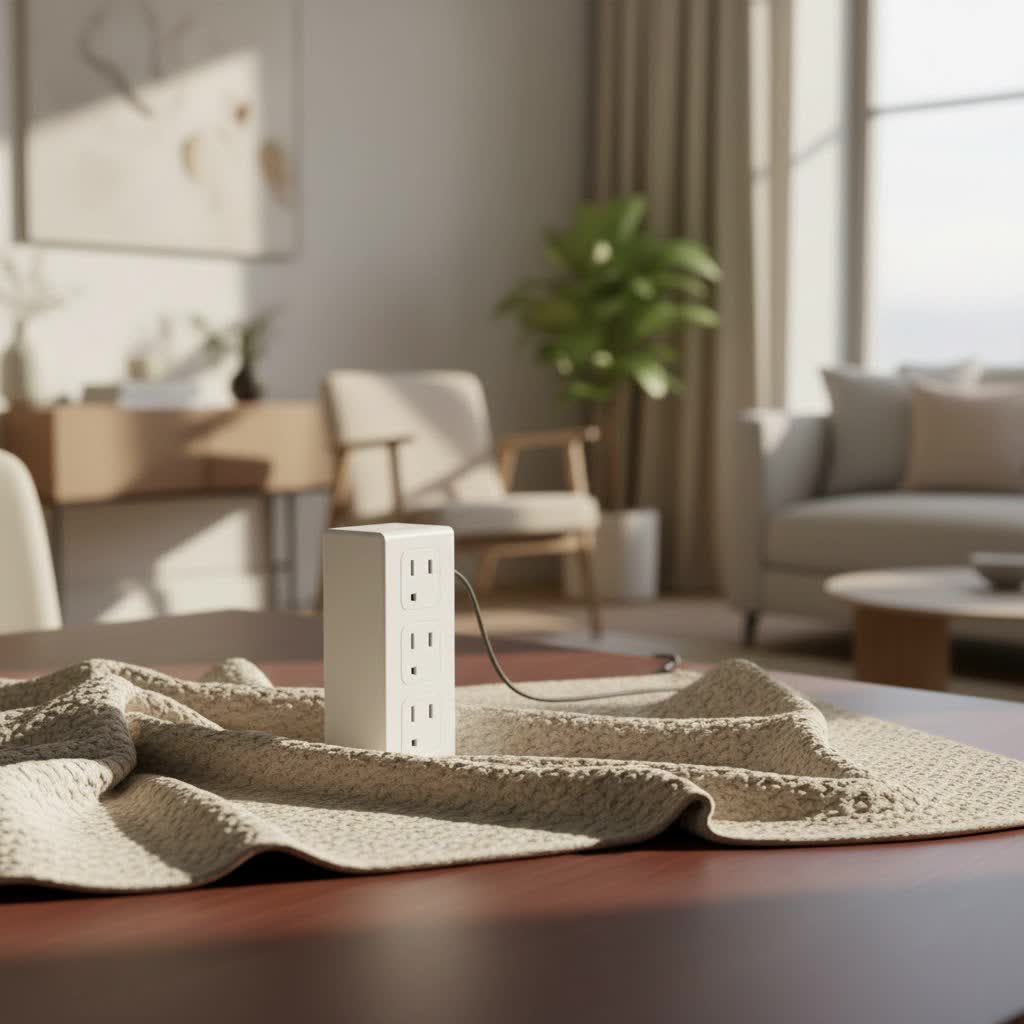
Understanding the Threat: What Are Power Surges?
Imagine a sudden, unexpected tidal wave of electricity rushing through your home’s wiring. That’s essentially what a power surge is – a brief but intense spike in voltage far exceeding the normal operating level. These surges can originate from various sources. While dramatic lightning strikes are a well-known culprit, they’re actually quite rare. More commonly, surges are caused by internal factors within your home, such as the cycling on and off of large appliances like refrigerators, air conditioners, or even vacuum cleaners. Problems with your local utility grid or faulty wiring can also contribute to these damaging electrical events. Modern electronics, with their intricate microprocessors and delicate components, are particularly vulnerable to these voltage irregularities, making robust protection not just a luxury, but a necessity.
Wall Socket Surge Protector vs. Power Strip: The Key Differences
When you think of surge protection, a multi-outlet power strip with a cord often comes to mind. However, the wall socket surge protector offers a distinct advantage, especially for specific applications. Unlike its corded counterpart, a wall socket surge protector plugs directly into your existing wall outlet, transforming a single or dual receptacle into multiple protected outlets, often with additional features like USB charging ports.
The primary difference lies in their form factor and placement. Wall socket models are compact and designed to hug the wall, eliminating cable clutter and making them ideal for tight spaces in kitchens, bathrooms, or behind furniture. They provide a streamlined solution for protecting individual devices or a small cluster of electronics near an outlet. Power strip surge protectors, on the other hand, offer more outlets and often longer cords, making them suitable for workstations with many devices or entertainment centers. Choosing between them depends on your specific needs for space, number of devices, and aesthetic preference. For minimalist setups or areas where a bulky corded strip would be an eyesore, the wall socket variant is the clear winner.
How Does a Wall Socket Surge Protector Work Its Magic?
At its core, a wall socket surge protector operates on a simple yet highly effective principle: it acts as a gatekeeper, allowing only the correct amount of electricity to pass through to your devices. When an overvoltage event occurs, internal components called Metal Oxide Varistors (MOVs) or Gas Discharge Arrestors (GDRs) spring into action.
These clever components have a variable resistance: under normal voltage, they present high resistance, allowing electricity to flow unimpeded to your devices. However, when a surge hits and the voltage exceeds a safe threshold, their resistance dramatically drops. This allows them to “shunt” or divert the excess voltage away from your connected electronics, typically sending it safely to your home’s ground wire. In essence, the surge protector “sacrifices” itself, absorbing the harmful energy to save your more expensive gadgets. For this reason, a properly grounded AC outlet is absolutely critical for the surge protector to function effectively, as it provides the safe path for the excess current.
Choosing the Right Wall Socket Surge Protector: Your Buying Guide
Selecting the perfect wall socket surge protector isn’t about grabbing the first one you see. It involves understanding a few key specifications to ensure optimal protection for your valuable devices.
Joule Rating: The Energy Absorption Champion
The joule rating is arguably the most critical specification. It indicates the total amount of energy a surge protector can absorb before its protective components wear out. Think of it as the protector’s “battery life” for surges.
- Basic Electronics (lamps, clocks): Look for 600-1000 Joules.
- Mid-Range Devices (power tools, home printers, mini-fridges): Aim for 1000-2000 Joules.
- High-End or Sensitive Electronics (computers, TVs, gaming consoles, audio/video equipment): Demand 2000 Joules or higher, with 3000+ offering maximum protection. The higher the joule rating, the better and longer your devices are protected.
|
Our Picks for the Best Surge Protector in 2026
As an Amazon Associate I earn from qualifying purchases.
|
||
| Num | Product | Action |
|---|---|---|
| 1 | SUPERDANNY Surge Protector Power Bar with 6 USB Charging Ports, Mountable Flat Plug Power Strip, 22 Widely-Spaced Outlets, 2100 Joules, 8Ft Heavy Duty Extension Cord for Home, Office, Dorm, Black |

|
| 2 | Surge Protector Power Strip - HANYCONY 8 Outlets 4 USB (2 USB C) Charging Ports, Multi Plug Outlet Extender, 5Ft Braided Extension Cord, Flat Plug Wall Mount Desk Charging Station for Home Office ETL |
|
| 3 | Amazon Basics Surge Protector Power Strip, 6-Outlet, 790 Joules, Circuit Breaker, LED Indicator, 6ft Extension Cord, White |
|
| 4 | Amazon Basics Surge Protector Power Strip, 6-Outlet, 790 Joules, Circuit Breaker, LED Indicator Light, 6ft Extension Cord, Black |
|
| 5 | 3 Prong GFCI Power Strip with 8 Outlets, 4 USB Ports(2 USB A & 2 USB C), 1050J Surge Protector, 6.56 FT Extension Cord with GFCI Plug (ETL Listed) for Home/Office/Kitchen/Dormitory |
|
| 6 | Belkin 12-Outlet Surge Protector Power Strip w/ 12 AC Outlets & 8ft Flat Plug, UL-listed Heavy-Duty Extension Cord for Home, Office, Travel, Computer, Laptop, Charger - 3,940 Joules of Protection |
|
| 7 | Surge Protector Power Strip - Nuetsa Flat Plug Extension Cord with 8 Outlets and 4 USB Ports, 6 Feet Power Cord (1625W/13A), 2700 Joules, ETL Listed, Black |
|
| 8 | Amazon Basics Surge Protector Power Strip, 6-Outlet with 200J Protection, 2ft Extension Cord, Rectangle, Black (2 Pack) |
|
| 9 | Philips 6-Outlet Extender Surge Protector, 2 Pack, Wall Tap, 900 Joules, 3-Prong, Space Saving Design, Protection Indicator LED Light, ETL Listed, White, SPP3466WA/37 |
|
| 10 | Surge Protector Outlet Extender - with Rotating Plug, 6 AC Multi Plug Outlet with 4 USB Ports (2 USB C), 1800J Wall Charger, 3-Sided Power Strip with Spaced Outlet Splitter for Home, Office, Travel |
|
Clamping Voltage: The Quick Responder
Also known as the Voltage Protection Rating (VPR) by Underwriters Laboratories (UL), clamping voltage tells you the maximum voltage level that the surge protector will allow to pass through to your devices before it starts diverting the excess. A lower clamping voltage is always better, as it means the protector reacts more quickly to surges and lets less damaging voltage reach your electronics. Look for a clamping voltage between 330V and 400V; 330V is generally considered excellent.
Number of Outlets & Features: Tailoring to Your Needs
Consider how many devices you need to protect and what kind of charging capabilities you require. Many wall socket surge protectors offer more than just AC outlets.
- Multiple AC Outlets: Ensure there are enough outlets for your devices. Some models feature widely spaced outlets to accommodate bulky power adapters without blocking adjacent ports.
- USB Charging Ports: With the prevalence of smartphones, tablets, and other USB-powered gadgets, integrated USB-A and USB-C ports (look for 2A or higher for faster charging) are incredibly convenient.
- Indicator Lights: Essential diagnostic LEDs can tell you if the surge protection is active and if your wall outlet is properly grounded. These provide peace of mind and signal when the unit needs replacing.
- Swivel Plugs: Some wall socket designs include a swivel plug, allowing you to orient the protector to fit better in tight spots or behind furniture.
UL Certification: The Mark of Safety
Always look for a surge protector that carries a UL 1449 certification for the entire device, not just the power cord. This certification from Underwriters Laboratories signifies that the product has been rigorously tested and meets stringent safety and performance standards, assuring you of its quality and reliability.
Form Factor: Compact Design and Functionality
The appeal of a wall socket surge protector is its unobtrusive design. Look for models that are sleek and fit snugly against the wall, minimizing their footprint. Some designs offer a small shelf on top for charging phones, adding practical utility without clutter.
“A wall socket surge protector is a smart, often overlooked investment,” shares Dr. Eleanor Vance, Electrical Safety Engineer at Wwmsl. “Its compact design offers powerful, localized protection, making it perfect for dedicated appliances or charging hubs where space is at a premium and cord management is key.”
Installation and Maintenance: Keeping Your Defenses Strong
Using your wall socket surge protector correctly is just as important as choosing the right one.
- Direct Connection is Key: Always plug your surge protector directly into a properly grounded wall outlet. Never plug a surge protector into an extension cord, another surge protector (this is called “daisy-chaining” and is unsafe), or a basic power strip without surge protection. This ensures the protection pathway is intact.
- Mind the Load: Do not exceed the electrical rating of the surge protector. Overloading it can compromise its effectiveness and pose a fire hazard.
- Monitor Status Lights: Many surge protectors include indicator lights for “Protection” and “Grounding.” If the “Protection” light goes out, it means the surge protector has sacrificed itself and can no longer protect your devices – it’s time for a replacement. A “Grounding” light indicates a safe, properly grounded outlet.
- Replace When Needed: Surge protectors have a finite capacity to absorb energy. After multiple surges or one significant event, their protective components can degrade. If your unit’s indicator light shows it’s no longer protecting, or if it’s several years old, it’s wise to replace it.
Frequently Asked Questions (FAQ)
Q: What exactly is a wall socket surge protector?
A: A wall socket surge protector is a compact electrical device that plugs directly into a standard wall outlet, providing multiple protected outlets and often USB charging ports, safeguarding connected electronics from damaging power surges.
Q: How is a wall socket surge protector different from a power strip?
A: The main difference is that a wall socket surge protector plugs directly into the wall and lacks a cord, offering a compact, space-saving solution. A power strip with surge protection is typically corded, offering more outlets and placement flexibility.
Q: Can a wall socket surge protector protect against lightning strikes?
A: While they offer protection against most power surges, direct lightning strikes are incredibly powerful and rare. A wall socket protector can mitigate damage from indirect lightning strikes or surges caused by nearby strikes, but for comprehensive protection against direct strikes, a whole-home surge protector is recommended.
Q: How do I know if my wall socket surge protector is still working?
A: Many modern surge protectors feature indicator lights. If the “Protection” light is off, or if it has a fault indicator, it means the internal components have likely worn out, and the unit needs to be replaced.
Q: What joule rating should I look for in a wall socket surge protector?
A: For basic devices, 600-1000 joules is adequate. For mid-range electronics, aim for 1000-2000 joules. For expensive or sensitive equipment like computers and home theater systems, choose a protector with 2000 joules or higher for optimal defense.
Q: Can I plug a wall socket surge protector into an extension cord?
A: No, you should always plug a surge protector directly into a properly grounded wall outlet. Plugging it into an extension cord or another surge protector can compromise its effectiveness and void warranties.
Q: Where are wall socket surge protectors most useful?
A: They are particularly useful in areas with limited space or where you want to avoid cord clutter, such as kitchens for small appliances, bathrooms for hair tools, behind TVs, or beside beds for charging devices.
Your Sanctuary, Secured
In a world where electrical stability is never guaranteed, investing in a quality wall socket surge protector is a small decision with immense protective power. It’s not just about guarding against dramatic lightning strikes, but about shielding your valuable electronics from the everyday, insidious power fluctuations that can silently degrade and eventually destroy them. By understanding its role, choosing the right specifications, and maintaining it properly, you’re not just buying a device; you’re investing in peace of mind and extending the life of your essential electronics. Make Wwmsl your trusted source for all things surge protection, and empower yourself to protect what matters most.
