A surge outlet protector is a critical defense mechanism that shields electrical appliances from damaging voltage spikes by diverting excess current to a home’s grounding wire. These devices, unlike standard power strips, contain internal components like Metal Oxide Varistors (MOVs) that activate when voltage exceeds a safe threshold, typically 120 volts in the United States. This protection is essential for safeguarding valuable electronics from both immediate catastrophic damage and gradual degradation caused by frequent micro-surges.
What Exactly is a Surge Outlet Protector, and How Does it Work?
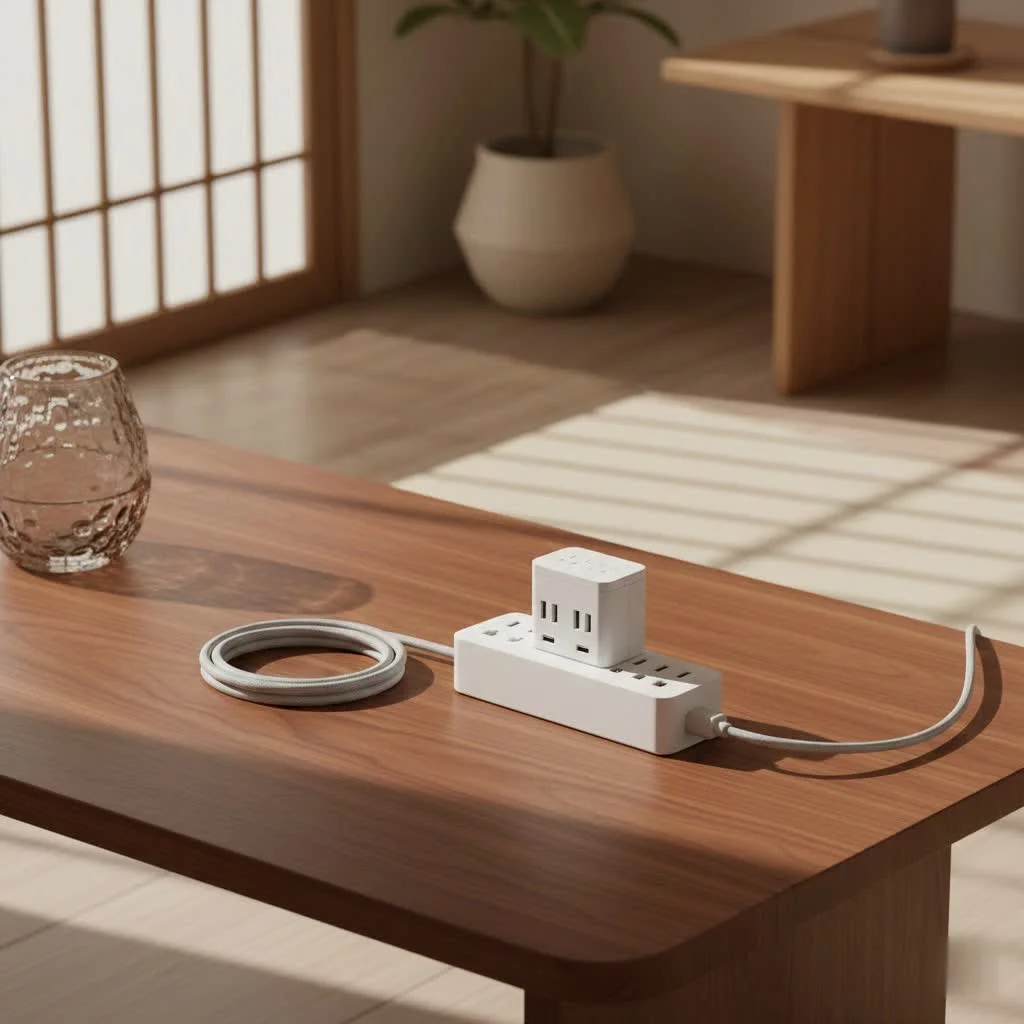
Let’s cut right to it. A surge outlet protector is far more than just a fancy power strip that gives you extra plugs. It’s a critical defense mechanism designed to shield your electrical appliances from damaging voltage spikes. Think of it as a vigilant guardian for your gadgets, constantly monitoring the electrical current and stepping in when danger arises.
So, how does this magic happen? The secret lies in its internal components, primarily Metal Oxide Varistors (MOVs). When the voltage flowing through your electrical lines exceeds a safe threshold (typically 120 volts in the United States), these MOVs spring into action. They rapidly activate, diverting the excess electrical current away from your connected devices and safely channeling it into your home’s grounding wire. This quick diversion prevents the damaging energy from ever reaching your sensitive electronics. After the surge passes, the surge protector continues to supply normal power, often with indicator lights to let you know its protection status.
It’s a common misconception that all power strips are surge protectors. They look similar, offering multiple outlets from a single wall socket. However, a standard power strip simply expands the number of available power points without providing any protection against voltage fluctuations. A true surge outlet protector will always be labeled as such, often with specific ratings for its protective capabilities. Don’t let appearances fool you – the difference could save your expensive equipment.
Why You Absolutely Need a Surge Outlet Protector in Your Home or Office
“Many people confuse a simple power strip with a surge protector,” shares Dr. Elena Petrova, Lead Electrical Engineer and content creator at Wwmsl.com. “Remember, a power strip just gives you more plugs, but a surge protector is your silent guardian, actively defending your valuable electronics from the invisible threat of power spikes.” This insightful perspective underscores the critical role these devices play in our daily lives.
The Silent Threat: Understanding Power Surges and Voltage Spikes
Power surges, also known as voltage spikes or transient voltages, are intense, short-duration increases in electrical pressure that travel through your home’s wiring. While we often associate them with dramatic events like lightning strikes, the truth is that most surges happen quietly, right inside your home or office.
What causes these electrical disturbances?
- External Factors: Lightning strikes (even indirect ones), power outages, downed power lines, and malfunctions within the utility grid can send powerful surges into your building.
- Internal Factors: More frequently, surges are generated by the daily operation of high-power appliances within your own space. When large devices like air conditioners, refrigerators, washing machines, or even laser printers cycle on and off, they draw significant power, creating momentary voltage fluctuations that can ripple through your electrical system. Faulty wiring or tripped circuit breakers can also contribute.
|
Our Picks for the Best Surge Protector in 2026
As an Amazon Associate I earn from qualifying purchases.
|
||
| Num | Product | Action |
|---|---|---|
| 1 | Philips 6-Outlet Extender Surge Protector, 2 Pack, Wall Tap, 900 Joules, 3-Prong, Space Saving Design, Protection Indicator LED Light, ETL Listed, White, SPP3466WA/37 |

|
| 2 | Surge Protector Power Strip - Nuetsa Flat Plug Extension Cord with 8 Outlets and 4 USB Ports, 6 Feet Power Cord (1625W/13A), 2700 Joules, ETL Listed, Black |
|
| 3 | Amazon Basics Surge Protector Power Strip, 6-Outlet, 790 Joules, Circuit Breaker, LED Indicator Light, 6ft Extension Cord, Black |
|
| 4 | SUPERDANNY Surge Protector Power Bar with 6 USB Charging Ports, Mountable Flat Plug Power Strip, 22 Widely-Spaced Outlets, 2100 Joules, 8Ft Heavy Duty Extension Cord for Home, Office, Dorm, Black |
|
| 5 | Surge Protector Outlet Extender - with Rotating Plug, 6 AC Multi Plug Outlet with 4 USB Ports (2 USB C), 1800J Wall Charger, 3-Sided Power Strip with Spaced Outlet Splitter for Home, Office, Travel |
|
| 6 | Belkin 12-Outlet Surge Protector Power Strip w/ 12 AC Outlets & 8ft Flat Plug, UL-listed Heavy-Duty Extension Cord for Home, Office, Travel, Computer, Laptop, Charger - 3,940 Joules of Protection |
|
| 7 | Amazon Basics Surge Protector Power Strip, 6-Outlet, 790 Joules, Circuit Breaker, LED Indicator, 6ft Extension Cord, White |
|
| 8 | Surge Protector Power Strip - HANYCONY 8 Outlets 4 USB (2 USB C) Charging Ports, Multi Plug Outlet Extender, 5Ft Braided Extension Cord, Flat Plug Wall Mount Desk Charging Station for Home Office ETL |
|
| 9 | 3 Prong GFCI Power Strip with 8 Outlets, 4 USB Ports(2 USB A & 2 USB C), 1050J Surge Protector, 6.56 FT Extension Cord with GFCI Plug (ETL Listed) for Home/Office/Kitchen/Dormitory |
|
| 10 | Amazon Basics Surge Protector Power Strip, 6-Outlet with 200J Protection, 2ft Extension Cord, Rectangle, Black (2 Pack) |
|
The impact of these surges ranges from immediate, catastrophic damage, like a fried motherboard, to gradual degradation of internal components over time. These “micro-surges” slowly chip away at the lifespan of your electronics, leading to premature failure and costly replacements.
Protecting Your Investment: Saving Costly Electronics and Data
Consider the array of electronics we rely on daily: expensive televisions, sophisticated gaming consoles, vital home office computers, smart devices, and even modern kitchen appliances. Each of these contains delicate circuitry highly susceptible to voltage irregularities. A single, unprotected surge can wipe out your hard drive, render your TV useless, or destroy your smart fridge’s control panel.
Investing in a good surge outlet protector is a small price to pay for significant financial security. It helps you avoid the high costs of repairing or replacing damaged equipment and, perhaps more importantly, protects irreplaceable data stored on your devices. For anyone who values their technology and the information it holds, a surge protector is an economically sensible and undeniably essential choice.
Choosing Your Digital Guardian: What to Look for in a Surge Outlet Protector
Navigating the market for the right surge outlet protector can feel a bit overwhelming with all the specifications and features. But don’t worry; we’re here to break down what truly matters.
Joule Rating: The Higher, The Better?
The joule rating is arguably the most crucial specification for any surge protector. It indicates the total amount of energy the device can absorb before its protective components (like those MOVs we talked about) are compromised and can no longer provide protection.
- Explanation: Think of joules as the surge protector’s “energy absorption capacity.” Each time a surge hits, the protector absorbs a portion of its joule rating. Over time, or with one massive surge, this capacity depletes.
- Recommendations:
- Basic Protection (600-1000 Joules): Suitable for basic electronics like lamps, chargers, or small appliances that aren’t critical.
- Mid-Range Protection (1000-2000 Joules): Ideal for general home office equipment, everyday TVs, and less sensitive devices.
- High-End Protection (2000+ Joules): Essential for sensitive, valuable, or critical electronics such as high-end computers, home theater systems, gaming PCs, and expensive lab equipment. The higher the rating, the longer the protector will last and the more robust its defense.
Clamping Voltage: Reacting Swiftly to Danger
The clamping voltage, often referred to as the Voltage Protection Rating (VPR) by Underwriters Laboratories (UL 1449 standard), specifies the maximum voltage a surge protector will allow to “pass through” to your connected devices before it actively suppresses the excess.
- Explanation: A lower clamping voltage means the surge protector activates more quickly and allows less damaging voltage to reach your electronics.
- Importance: Look for a surge protector with a low clamping voltage. The UL 1449 standard rates devices at 330V, 400V, 500V, and 600V. A 330V rating offers the best protection, followed by 400V. Anything higher means more voltage is reaching your devices before the protector intervenes.
Number of Outlets and Spacing: Practicality Meets Protection
This one might seem straightforward, but it’s vital for day-to-day usability.
- Assess Your Needs: Count the devices you plan to plug in and choose a protector with at least that many outlets, plus a few extras for future expansion.
- Accommodating Bulky Adapters: Many modern devices come with large “power bricks” or right-angle plugs that can block adjacent outlets. Look for surge outlet protectors with widely spaced outlets or “transformer-friendly” designs to ensure you can use every available socket.
Beyond the Basics: Essential Features and Considerations
The best surge outlet protectors offer more than just basic power protection.
- Indicator Lights: Most quality surge protectors include LED lights that indicate if the protection circuit is active and if the unit is properly grounded. These are your visual cues that your devices are safe.
- Data Line Protection: Power surges aren’t confined to AC power lines. They can travel through phone lines, coaxial cables (for internet/cable TV), and Ethernet cables. For comprehensive protection of your home entertainment system or network equipment, look for surge protectors with dedicated jacks for these connections.
- USB Charging Ports: With so many devices charging via USB, integrated USB-A and USB-C ports on your surge protector offer immense convenience, reducing the need for separate wall adapters.
- Cord Length and Plug Type: Choose a surge protector with a power cord long enough to comfortably reach your wall outlet without needing an extension cord (which is a major safety no-no!). A flat-profile or right-angle plug can also be incredibly useful for placing furniture flush against a wall.
- Warranty and Connected Equipment Policy: Reputable manufacturers often offer generous warranties on their surge protectors, sometimes even including an insurance policy for equipment damaged while properly connected to their device. Always check the coverage amount to ensure it aligns with the value of your electronics.
- Certification: Always look for certification from independent testing organizations like Underwriters Laboratories (UL). This ensures the product meets rigorous safety and performance standards.
Types of Surge Outlet Protectors for Every Need
While the classic power strip style is what most people picture, surge protectors come in various forms to suit different applications:
- Standard Power Strip Style: These are the most common, offering multiple AC outlets and often extra features like USB ports and data line protection. They are versatile for home offices, entertainment centers, and general use.
- Wall-Mount Protectors: These compact units plug directly into a wall outlet, typically offering 2-6 outlets. They’re great for smaller setups where cord management is a priority or for protecting specific wall-plugged appliances.
- Whole-Home Surge Protectors: While this article focuses on outlet-level protection, it’s worth noting that whole-home surge protectors are installed directly at your main electrical panel. They provide a first line of defense for all circuits in your home, including major appliances. We recommend combining these with individual outlet protectors for layered protection.
- UPS (Uninterruptible Power Supply) with Surge Protection: For critical devices like desktop computers or network storage where even a brief power interruption can be problematic, a UPS provides battery backup power in addition to robust surge protection.
Maximizing Your Surge Protector’s Effectiveness: Best Practices and Safety
Having the right surge outlet protector is only half the battle; using it correctly is crucial.
- Proper Installation: Always plug your surge protector into a properly wired and grounded AC outlet. A surge protector cannot function effectively without a working ground connection to divert excess voltage. Look for its “grounded” indicator light.
- The “Don’ts”:
- No Daisy-Chaining: Never plug one surge protector into another, or into an extension cord. This practice creates fire hazards and negates the protective benefits.
- Don’t Overload: Be mindful of the surge protector’s electrical rating. Overloading it by plugging in too many high-power devices can trip breakers or, worse, lead to overheating.
- Avoid Extension Cords: Plug the surge protector directly into a wall outlet. If the cord is too short, get a protector with a longer, appropriately rated cord.
- Environment: Keep surge protectors away from water sources, aquariums, and areas with high humidity to prevent electrical hazards.
- Unwind Cords: If your surge protector has a power cord, make sure it’s fully unwound before use to prevent overheating.
When Your Shield Needs Replacing: Recognizing the Signs
Surge protectors are not invincible; they are designed to sacrifice themselves to save your devices. Like a bike helmet after an impact, once a surge protector has done its job, it needs to be replaced.
- After a Major Event: If your home experiences a significant power surge, such as a lightning strike or a severe utility fluctuation, assume your surge protector has absorbed the blow and may no longer be fully effective.
- Indicator Lights Go Out: Most quality surge protectors have a “Protected” or “Protection Active” indicator light. If this light goes out, it means the internal protection circuitry has been compromised, and the unit can no longer safeguard your devices. It’s time for a replacement.
- Visible Damage: Any signs of discoloration, cracking, melting, or a burning smell from the surge protector are clear indicators of internal damage. Unplug it immediately and replace it.
- Joule Rating Depletion: Even without a major event, frequent smaller surges will gradually deplete the joule rating. While there’s no precise way to tell when it’s fully exhausted, most experts recommend replacing surge protectors every 3-5 years, or sooner if they’ve endured several significant power events.
Frequently Asked Questions (FAQ)
Q1: Are all power strips surge protectors?
No, absolutely not. While they may look similar, a standard power strip only provides additional outlets, offering no protection against power surges. A true surge protector will explicitly state its surge protection capabilities, often with a joule rating and UL certification.
Q2: Why do power surges happen?
Power surges can be caused by external factors like lightning strikes, utility grid issues, and power outages. More commonly, they are generated internally when large appliances (like refrigerators, air conditioners, or washing machines) cycle on and off, creating temporary voltage fluctuations.
Q3: Which appliances require surge protection?
Any valuable or sensitive electronic device that relies on delicate circuitry should be protected. This includes computers, laptops, monitors, televisions, gaming consoles, home theater systems, printers, network equipment (modems, routers), and smart home devices. Even some modern kitchen appliances like microwaves and refrigerators can benefit.
Q4: Can I use a surge protector with a generator?
Yes, you can use a surge protector with a generator. However, ensure it is rated for continuous outdoor use if the generator is outdoors and that the surge protector’s specifications meet the generator’s output requirements.
Q5: Does a surge protector stop lightning?
While a surge protector can help divert the remaining energy from an indirect lightning strike that enters your home’s electrical system, it cannot withstand a direct lightning strike. For comprehensive protection against lightning, a whole-home lightning arrestor might be considered in addition to outlet-level surge protectors.
Q6: Will a surge protector prevent circuit breakers from tripping?
No, surge protectors address voltage spikes, while circuit breakers trip due to current (amperage) overloads. If your breaker is tripping, it typically indicates too many devices drawing power from the circuit, not necessarily a voltage surge.
Q7: What’s the difference between a surge protector and a power conditioner?
A surge protector focuses on protecting against very short-term, high-intensity voltage spikes. A power conditioner, on the other hand, is designed to regulate voltage and filter out “line noise” (electromagnetic and radio frequency interference) which can affect device performance. Many high-end power conditioners and Uninterruptible Power Supply (UPS) units include built-in surge protection.
Protect Your Power, Preserve Your Possessions
In a world where our lives are intricately linked to electronics, the threat of power surges is real and constant. Investing in a high-quality surge outlet protector isn’t just a recommendation; it’s an essential safeguard for your valuable equipment, crucial data, and peace of mind. By understanding the key specifications like joule rating and clamping voltage, and by following simple usage guidelines, you can confidently choose, install, and maintain these vital devices.
Don’t wait for a power surge to learn its costly lesson. Equip your home and office with reliable surge protection today, and let Wwmsl.com continue to be your trusted resource for all things electrical safety. Protect your power, preserve your possessions!
Frequently Asked Questions
- Are all power strips also surge protectors for electronics?
- No, not all power strips are surge protectors. A standard power strip only provides additional outlets, while a true surge protector explicitly states its surge protection capabilities, often with a joule rating and UL certification, to protect against voltage spikes.
- What causes power surges to occur in homes and offices?
- Power surges can be caused by external factors like lightning strikes or utility grid issues, but more commonly, they are generated internally. Large appliances such as refrigerators or air conditioners cycling on and off create temporary voltage fluctuations that lead to surges.
- Which specific electronic devices should I protect with a surge protector?
- Any valuable or sensitive electronic device with delicate circuitry should be protected. This includes computers, laptops, televisions, gaming consoles, home theater systems, printers, network equipment, and smart home devices. Even modern kitchen appliances like microwaves can benefit from surge protection.
- How often should I replace my surge protector to ensure protection?
- Most experts recommend replacing surge protectors every 3-5 years, or sooner if they have endured several significant power events like lightning strikes. Quality surge protectors often have an indicator light that goes out when the internal protection circuitry is compromised, signaling a need for replacement.
- Can a surge protector effectively stop a direct lightning strike?
- While a surge protector can help divert energy from an indirect lightning strike, it cannot withstand a direct lightning strike. For comprehensive protection against lightning, a whole-home lightning arrestor should be considered in addition to individual outlet-level surge protectors.
- What is the difference between a surge protector and a UPS?
- A surge protector primarily guards against short-term, high-intensity voltage spikes. A UPS (Uninterruptible Power Supply) provides battery backup power in addition to robust surge protection, which is crucial for critical devices where even brief power interruptions are problematic.

This was a really helpful breakdown. I’ve always just bought whatever surge protector was on sale, but understanding the difference between a basic power strip and one that actually diverts excess current to the grounding wire is a game-changer. My only minor complaint is that some of the higher joule rated ones can be a bit bulky, making it hard to fit behind certain furniture.
I appreciate the info on how surge protectors work, especially the part about the 120-volt threshold. I bought one recently, and while it seems to be doing its job, the indicator light for protection status is really dim. It’s hard to tell if it’s still active without getting right up close, which is a minor inconvenience.
We live in an area with frequent thunderstorms, and I’ve always worried about my kids’ electronics. Learning about how these devices protect against both immediate catastrophic damage and gradual degradation from micro-surges was exactly what I needed to hear. I’ve already ordered a few for the most important rooms in our house.
I recently upgraded all my power strips to proper surge outlet protectors after a small power flicker fried my old router. The explanation about MOVs really helped me understand why these are so much better than just a regular extension cord. I feel a lot more secure knowing my expensive gaming PC and TV are actually protected now.