In homes with two-prong electrical outlets, a standard MOV-based “2 prong surge protector” will not effectively protect sensitive electronics from power surges because it lacks a crucial ground connection. Most surge protectors rely on a ground wire to safely divert excess electricity during a surge; without it, they function primarily as power strips, leaving devices vulnerable. For true surge protection in ungrounded environments, specialized Series Mode surge protectors are recommended as they do not require a ground to function.
What Exactly is a “2 Prong Surge Protector”?
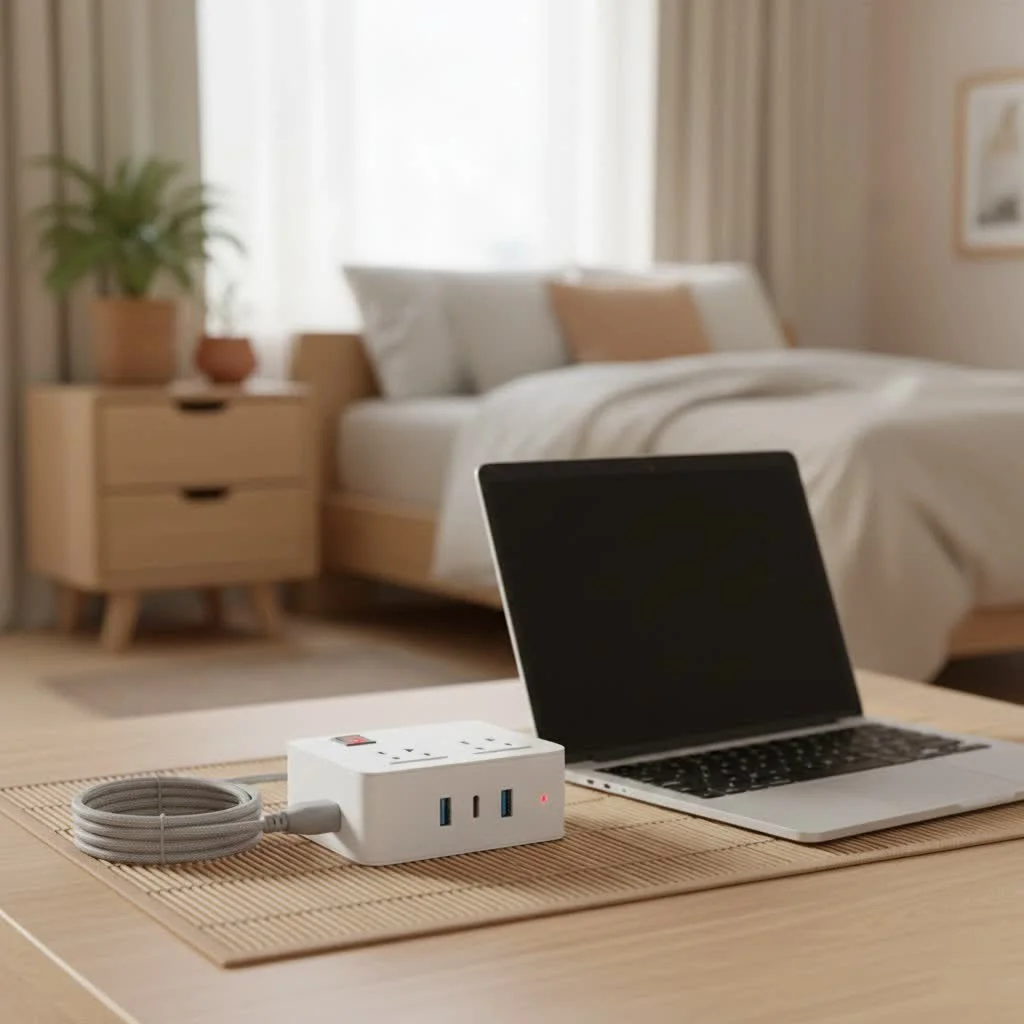
When you encounter a product marketed as a “2 prong surge protector,” you’re typically looking at a power strip or outlet adapter designed to plug into older, ungrounded two-prong outlets. These devices often feature multiple AC receptacles and sometimes USB charging ports, providing convenience and expanding your plug-in options. Crucially, many of them are equipped with a three-prong input plug, necessitating the use of a “cheater plug” or built-in adapter to fit into a two-prong wall outlet. The core question, however, isn’t about their ability to fit, but their capacity to actually protect against surges when a proper ground connection is absent.
The Crucial Role of Grounding in Surge Protection
To understand the limitations of a “2 prong surge protector,” we first need to grasp how most surge protectors fundamentally operate. The vast majority of surge protection devices (SPDs) available today, particularly the common and affordable models you find in retail stores, rely on a technology called Metal Oxide Varistors (MOVs).
Here’s the simplified science: When a power surge — a sudden, dangerous spike in voltage — occurs, MOVs are designed to activate and divert that excess electricity away from your connected devices. Where does it go? Ideally, it’s shunted directly to the electrical ground wire. This ground wire acts as a safe pathway, directing the harmful surge current safely back to the earth, protecting your electronics from damage. Without a functional ground connection, this critical diversion path is incomplete, leaving the MOVs unable to perform their primary protective function effectively.
The Reality: Do 2-Prong Surge Protectors Really Work?
This is where the rubber meets the road, or rather, where the surge meets the missing ground. In an ungrounded two-prong outlet, a standard MOV-based surge protector plugged in via an adapter becomes, at best, a glorified power strip. It will supply power to your devices, but its ability to absorb and dissipate dangerous voltage spikes is severely compromised. [cite: 2, 4 from “do 2 prong surge protectors provide ground protection”]
“It’s a common pitfall,” explains Marcus Thorne, a veteran electrical safety consultant with Wwmsl. “People see the ‘surge protection’ label and assume their equipment is safe, even when plugged into an old, ungrounded outlet. But without that third, grounding prong doing its job, the surge has nowhere to go but potentially through your expensive electronics.”
Think of it like a safety net with a gaping hole. Some minimal “protection” might occur if the MOVs simply fail and open the circuit, but this is a destructive, one-time event and not the intended, reliable surge suppression. [cite: 2, 4 from “do 2 prong surge protectors provide ground protection”] The so-called “cheater plugs” (3-to-2 prong adapters) are often touted as a workaround, sometimes with a small metal tab meant to be attached to the outlet cover screw. However, relying on this for a safety ground is highly unreliable and often ineffective, providing a false sense of security. [cite: 1, 3 from “limitations of 2 prong surge protectors”]
Understanding the Risks of Ungrounded Outlets
Beyond the ineffective surge protection, using ungrounded two-prong outlets carries inherent safety risks, especially for modern electronics:
- Electric Shock Hazard: Without a ground wire, a fault in an appliance (e.g., a loose wire touching the metal casing) can energize the entire device, turning it into a shock hazard. The current has no direct path to ground, so it could potentially flow through a person who touches the faulty appliance. [cite: 2 from “limitations of 2 prong surge protectors”]
- Damage to Sensitive Electronics: Stray currents and voltage fluctuations can directly impact delicate internal components, leading to premature failure or immediate destruction of devices like computers, TVs, and gaming consoles. [cite: 3 from “limitations of 2 prong surge protectors”]
- Increased Fire Risk: While less common, electrical faults in ungrounded systems can lead to overheating and potential fire hazards if currents aren’t safely diverted or interrupted by a circuit breaker.
Solutions for Protecting Your Electronics in Ungrounded Homes
If your home is predominantly equipped with two-prong outlets, simply plugging in a standard surge protector isn’t enough. However, you do have several viable options to enhance both safety and equipment protection:
Option 1: The “Series Mode” Advantage
|
Our Picks for the Best Surge Protector in 2026
As an Amazon Associate I earn from qualifying purchases.
|
||
| Num | Product | Action |
|---|---|---|
| 1 | Amazon Basics Surge Protector Power Strip, 6-Outlet, 790 Joules, Circuit Breaker, LED Indicator Light, 6ft Extension Cord, Black |

|
| 2 | SUPERDANNY Surge Protector Power Bar with 6 USB Charging Ports, Mountable Flat Plug Power Strip, 22 Widely-Spaced Outlets, 2100 Joules, 8Ft Heavy Duty Extension Cord for Home, Office, Dorm, Black |
|
| 3 | Amazon Basics Surge Protector Power Strip, 6-Outlet with 200J Protection, 2ft Extension Cord, Rectangle, Black (2 Pack) |
|
| 4 | Surge Protector Power Strip - HANYCONY 8 Outlets 4 USB (2 USB C) Charging Ports, Multi Plug Outlet Extender, 5Ft Braided Extension Cord, Flat Plug Wall Mount Desk Charging Station for Home Office ETL |
|
| 5 | Belkin 12-Outlet Surge Protector Power Strip w/ 12 AC Outlets & 8ft Flat Plug, UL-listed Heavy-Duty Extension Cord for Home, Office, Travel, Computer, Laptop, Charger - 3,940 Joules of Protection |
|
| 6 | Philips 6-Outlet Extender Surge Protector, 2 Pack, Wall Tap, 900 Joules, 3-Prong, Space Saving Design, Protection Indicator LED Light, ETL Listed, White, SPP3466WA/37 |
|
| 7 | Surge Protector Power Strip - Nuetsa Flat Plug Extension Cord with 8 Outlets and 4 USB Ports, 6 Feet Power Cord (1625W/13A), 2700 Joules, ETL Listed, Black |
|
| 8 | Amazon Basics Surge Protector Power Strip, 6-Outlet, 790 Joules, Circuit Breaker, LED Indicator, 6ft Extension Cord, White |
|
| 9 | 3 Prong GFCI Power Strip with 8 Outlets, 4 USB Ports(2 USB A & 2 USB C), 1050J Surge Protector, 6.56 FT Extension Cord with GFCI Plug (ETL Listed) for Home/Office/Kitchen/Dormitory |
|
| 10 | Surge Protector Outlet Extender - with Rotating Plug, 6 AC Multi Plug Outlet with 4 USB Ports (2 USB C), 1800J Wall Charger, 3-Sided Power Strip with Spaced Outlet Splitter for Home, Office, Travel |
|
This is a game-changer for ungrounded environments. Unlike MOV-based protectors that shunt surges to ground, Series Mode surge protectors work differently. They actively filter the incoming surges, slowing them down and absorbing the excess energy within internal components before slowly releasing it back to the neutral line. The key benefit? They do not rely on a ground connection to function effectively. [cite: 1 from “best 2 prong surge protector for ungrounded outlets”]
“When it comes to ungrounded outlets, series mode surge protectors are a clear winner,” states Marcus Thorne. “They provide robust protection without the need for that third prong, making them ideal for older buildings where rewiring isn’t feasible.” These devices are often more expensive but offer superior, non-degrading protection and typically clean up electrical line noise as well.
Option 2: GFCI Outlets for Personal Safety
While GFCIs (Ground Fault Circuit Interrupters) don’t provide surge protection for equipment, they are crucial for personal safety. They detect imbalances in electrical current, indicating a potential shock hazard, and quickly cut off power. The National Electrical Code allows replacing a two-prong outlet with a GFCI outlet even if no ground wire is present in the circuit, provided it’s labeled “No Equipment Ground.” This protects people from electric shock, but remember, your devices are still vulnerable to surges. [cite: 3 from “best 2 prong surge protector for ungrounded outlets”]
Option 3: Professional Electrical Upgrades
The most comprehensive solution for both safety and surge protection is to upgrade your home’s wiring to include proper grounding. This typically involves installing new three-prong outlets connected to a dedicated ground wire that runs back to your electrical panel. While this can be a significant investment, it ensures optimal safety and allows all your surge protectors to function as intended. An electrician can also evaluate the possibility of installing a whole-house surge protector at your main electrical panel, which provides broader protection for all connected circuits.
Option 4: Uninterruptible Power Supplies (UPS)
For critical devices like computers or home theater systems, an Uninterruptible Power Supply (UPS) can offer an additional layer of protection. Many UPS units include surge suppression capabilities and provide battery backup during power fluctuations or outages. While most UPS units still benefit from a grounded connection for optimal surge diversion, some advanced models offer robust line conditioning that can help mitigate power anomalies even in less-than-ideal wiring scenarios.
Option 5: Prudent Usage
If none of the above options are immediately viable, simply be mindful of what you plug into ungrounded two-prong outlets. Avoid connecting high-value, sensitive, or high-wattage electronics. For devices that only have two prongs themselves (like many phone chargers or lamps), they inherently don’t utilize a ground connection for their own internal operation, but placing them behind a properly grounded surge protector still offers an initial line of defense for the outlet itself.
Choosing the Right Protection Strategy
When considering a “2 prong surge protector” or any solution for ungrounded outlets, here’s what to prioritize:
- For True Surge Protection without Ground: Invest in a Series Mode surge protector. Look for brands that specifically advertise this technology and its independence from a ground wire.
- For Personal Safety First: Install GFCI outlets in high-risk areas like bathrooms, kitchens, or any space where electronics might interact with water.
- For Comprehensive Protection: Consult a licensed electrician about upgrading your wiring to include grounding. This is the gold standard for both safety and effective surge protection.
- Always Check for Certification: Ensure any power strip or surge protector you buy has a UL (Underwriters Laboratories) certification, indicating it meets safety standards.
At Wwmsl, our mission is to empower you with choices that truly protect. Don’t compromise on safety or the lifespan of your valuable electronics by misunderstanding the role of grounding.
The Wwmsl Take: Prioritizing Protection in an Evolving Electrical Landscape
The world of electronics is constantly advancing, but our electrical infrastructure, especially in older homes, often lags behind. A “2 prong surge protector” offers a convenient form factor, but it’s vital to look beyond mere compatibility and understand the underlying principles of surge protection. True protection hinges on a solid understanding of grounding and selecting the right technology for your specific electrical environment.
Don’t let historical wiring put your precious electronics at risk. Take the time to assess your outlets, understand your options, and make informed choices. Whether it’s upgrading your wiring, installing GFCI outlets for personal safety, or investing in advanced series mode protectors for your most valuable equipment, prioritizing robust surge protection is an investment in peace of mind. Your devices, and your home, will thank you for it. Share your experiences and questions with us at Wwmsl.com – we’re here to help you navigate the complexities of electrical protection.

I got one of those ‘2 prong surge protectors’ that just acts like a power strip, and it was a bit misleading. It does give me more outlets, which is handy, but I was really hoping for actual surge protection for my vintage stereo system. I wish the distinction between a power strip and a true surge protector for ungrounded outlets was clearer on the packaging. Now I know what to look for.
I’ve been looking for a solution for my older home’s outlets and this was really helpful. I always thought any surge protector would work, but realizing most MOV-based ones need a ground connection was a game-changer. I picked up a couple of the recommended Series Mode protectors for my office equipment and feel much better about my setup now. It’s a bit of an investment, but worth it for peace of mind.
I appreciate the breakdown on why a typical 2-prong device won’t protect sensitive electronics. I have a lot of expensive gadgets and live in an older house, so power surges are a real concern. Knowing that the ground connection is crucial for most surge protectors helped me understand what to look for. I’ve already ordered a couple of the specialized units for my home office and entertainment center.
This information was exactly what I needed! I have a few rooms with only two-prong outlets and was always worried about my laptop and TV. Understanding that standard surge protectors are basically just power strips without a ground wire made so much sense. I’m definitely going to invest in some Series Mode surge protectors to keep my electronics safe. Thanks for clarifying everything!